
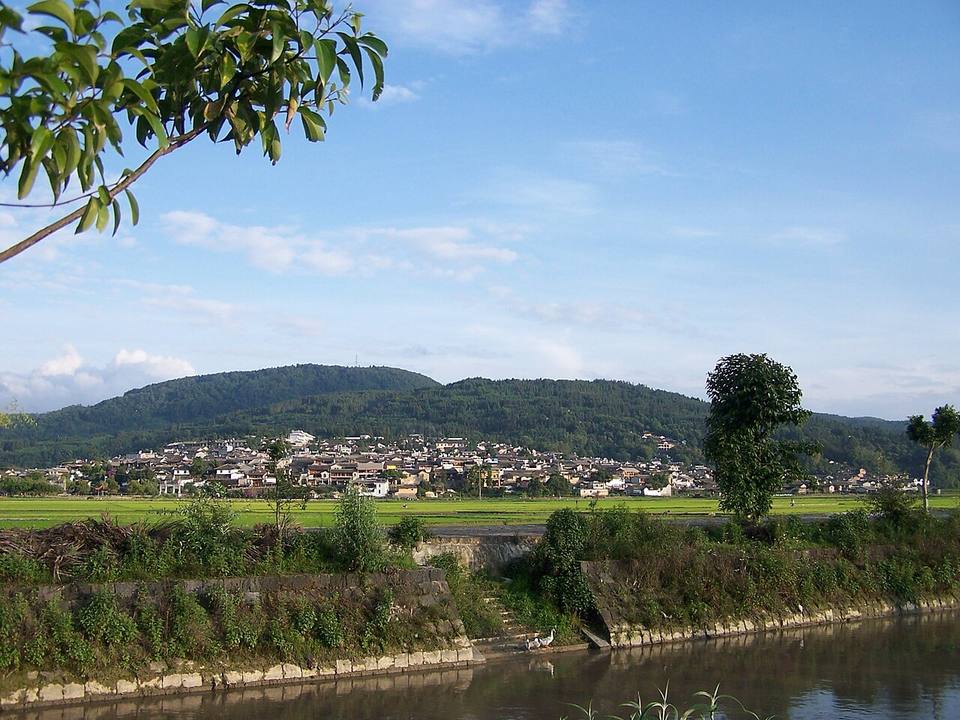
Tengchong City, Baoshan, Yunnan Province · Old Town / Geothermal Hot Springs
Tengchong (Heshun Old Town & Rehai)
The first city of the far frontier: Heshun's overseas-hometown library still burns its lamps while Rehai's Great Boiling Pot cooks eggs — a specimen of frontier civilisation on a volcanic plateau.
Location
Tengchong City, Baoshan, Yunnan Province
Stories and legends
Rehai's geothermal springs have "divine geothermal spring" folk tales — the legendary layer.
History and context
Tengchong lies on the western Yunnan border, a key point on the ancient Southern Silk Road, with a deep history of caravan culture and jadeite trade. Heshun is a famous overseas-Chinese hometown: descendants of Ming-era garrison soldiers and merchants who went to Burma built a hometown of ancestral halls and libraries ("Heshun, Shunhe"); the Heshun Library (built in 1928) is a model of the Chinese village library. Rehai is Tengchong's concentrated geothermal area (the Tengchong geothermal display zones are numerous; the Great Boiling Pot is a high-temperature boiling spring several metres across, boiling all year). In 1944 Tengchong became the city recovered in complete victory in the western Yunnan counteroffensive, and the National Martyrs' Cemetery (Guoshang Muyuan) is a sacred site of War of Resistance remembrance.
Local life
Tengchong's temperament is "frontier literary air": the laundry pavilions, ancestral halls and jadeite stalls in Heshun's lanes, Rehai's sulphur smell and the hot-air balloons of the volcano park, with gravity (the National Martyrs' Cemetery) and leisure (hot-spring inns) side by side. The slowness here differs from Lijiang's — it is the slowness of overseas-hometown elders sunning themselves and returned descendants telling stories of Burma.
Customs
"Boiling eggs in the Great Boiling Pot" at Rehai (strings of eggs cooked in a side spring) is the signature experience; Heshun has morning markets and ancestral-hall worship.
Beliefs
Multi-deity folk beliefs coexist with Buddhism and Taoism; the National Martyrs' Cemetery is a memorial site for the War of Resistance martyrs (visit in solemn quiet).
Local etiquette
Inside the National Martyrs' Cemetery, no frolicking, loud noise or inappropriate photo poses; never reach over the railings at Rehai's high-temperature springs to test the water (above 90°C it can scald); most of Heshun's old buildings have residents — do not enter uninvited.
Visiting notes
Best in autumn and winter (soaking season; the Ginkgo Village's golden period from late November to December is a bonus, per that year's leaf season); the old town's ticket is a combined multi-sight pass per official rules; Tengchong Airport / transfers from Baoshan both reach it; staying inside Heshun beats the city for dawn and dusk beauty.
What to eat nearby
Tengchong er si (fine rice noodles in fresh soup); Da Jiujia (stir-fried erkuai — the tale that the Ming Taizu emperor bestowed its name is widely told); clay-pot chicken (tuguozi); thin bean flour (xidoufen); the jar chicken of jadeite / overseas-hometown banquets
The restaurant belt inside Heshun old town, Tengchong city's food-culture street, and around the Rehai scenic area
Da Jiujia is stir-fried erkuai — oily and best eaten hot; tuguozi simmers slowly over charcoal — do not rush to lift the lid when it reaches the table
A full meal 60–110 yuan (for reference only)
Ginkgo Village is in Gudong Town, about a 40-minute drive from Heshun — agree charter prices first in peak season; for soaking at Rehai choose the proper pools inside the scenic area, and sulphur-spring clothes need changing and washing afterwards.
Source leads: Tengchong Municipal Bureau of Culture and Tourism; Heshun Old Town / Rehai scenic area official sites.
Image source · oldhouse.yin · CC BY-SA 3.0