

City guide · 小樽 Otaru
Otaru
A northern trading port of canals and gas lamps — the romantic city of herring wealth, sushi and glass
Otaru lies on Hokkaido's west coast, on the Sea of Japan — a city that climbs from its harbour up the hillside. From the Meiji through the Taishō years it was Hokkaido's centre of finance and logistics, its Ironai-dōri lined with banks and known as the "Wall Street of the North." Today the canal dug in the Taishō years, its stone warehouse rows, the glass workshops and music-box hall of Sakaimachi-dōri, and the old sushi shops of Sushi-ya-dōri have made Otaru Hokkaido's most nostalgic city for a stroll, and the Snow Light Path on winter nights is especially moving.
History
How the city came to be
The name "Otaru" comes from the Ainu for "a river among the sands." In the Edo period this was a herring fishery and a place of trade with the Japanese, and the "herring palaces" of the fishery owners were the early symbols of wealth. After the Meiji government set up the Development Commission, Otaru Port became Hokkaido's gateway, and the railway opened in 1880 was the first in Hokkaido. The canal was completed in 1923, with barges shuttling between the stone warehouses. After the war the port's role was shared out to Tomakomai and other ports; in 1966 the city proposed filling in the canal, citizens fought a preservation campaign for more than a decade, and in the end the northern canal and its warehouses were saved — and Otaru reinvented itself as a sightseeing city.
- 1869The Meiji government establishes the Development Commission; Otaru is developed in earnest as Hokkaido's gateway port
- 1880The railway from Temiya to Sapporo opens — the first railway in Hokkaido
- 1899Otaru Port designated an international trading port; banks and trading houses gather around Ironai
- 1923The Otaru Canal completed, underpinning the golden age of harbour logistics
- 1966The canal landfill plan announced; from 1973 the citizens' preservation movement rises, and partial preservation is achieved in the end
- 1980Promenades and gas lamps built along the canal; Otaru transforms into a sightseeing city
Must see
Places you shouldn’t miss

Local life
Food and local daily life
Otaru Canal
Must-try
- Sushi
- Kaisendon (seafood rice bowl)
- Jingisukan (grilled mutton)
Sushi (Otaru's Sushi-ya Dōri), seafood rice bowls, Genghis Khan grilled lamb, LeTAO double fromage cheesecake, Kitakaro / Rokkatei sweets
| Where to eat | Sushi-ya Dōri, restaurants around the canal, the area of old places such as Masazushi / Yabuhan |
|---|---|
| Dining etiquette | Don't bring outside food to sushi counters, and avoid strong perfume (it interferes with the fish) |
| Typical price per person | JPY 2,500–4,500 ≈ CNY 113–203 |
| Tips | Sushi lunch sets cost about half the price of dinner; ask how long sweet souvenirs keep refrigerated. |
Prices are typical rates as of October 2026, not exact quotes; CNY equivalents are approximate where exchange rates fluctuate.

Ocdp · CC0
Before you go
Rules to know in Otaru
There is no tipping in Japan
Do
- Say thank you with 'arigatō gozaimashita'
Don’t
- Pressing loose change on staff
Japan is a no-tipping country and bills usually include service; if you press a tip on staff, some will politely refuse.
Verified Oct 19, 2026Source: JNTO: Japanese table manners
Take off your shoes when you see a genkan (entrance step)
Do
- Take off your shoes at the entrance of homes, some restaurants, temples and hot-spring facilities
- If unsure, look for a shoe rack or slippers at the entrance
Don’t
- Stepping onto tatami or indoor wooden floors in shoes
It is seen as very rude.
Verified Oct 19, 2026Source: JNTO: Japanese etiquette
No phone calls on trains and the shinkansen; queue to board
Do
- Put your phone on silent; on the shinkansen, take calls in the area between carriages
- Queue at the marked spots on either side of the train door, and let people off before you get on
- Give priority seats to older people, pregnant women and passengers with limited mobility
Don’t
- Talking on the phone or playing sound aloud in the train
Not illegal, but you will get looks and a reminder from the conductor.
Verified Oct 19, 2026Source: JNTO: Japanese etiquette
Regional deep dives
Read deeper into each place
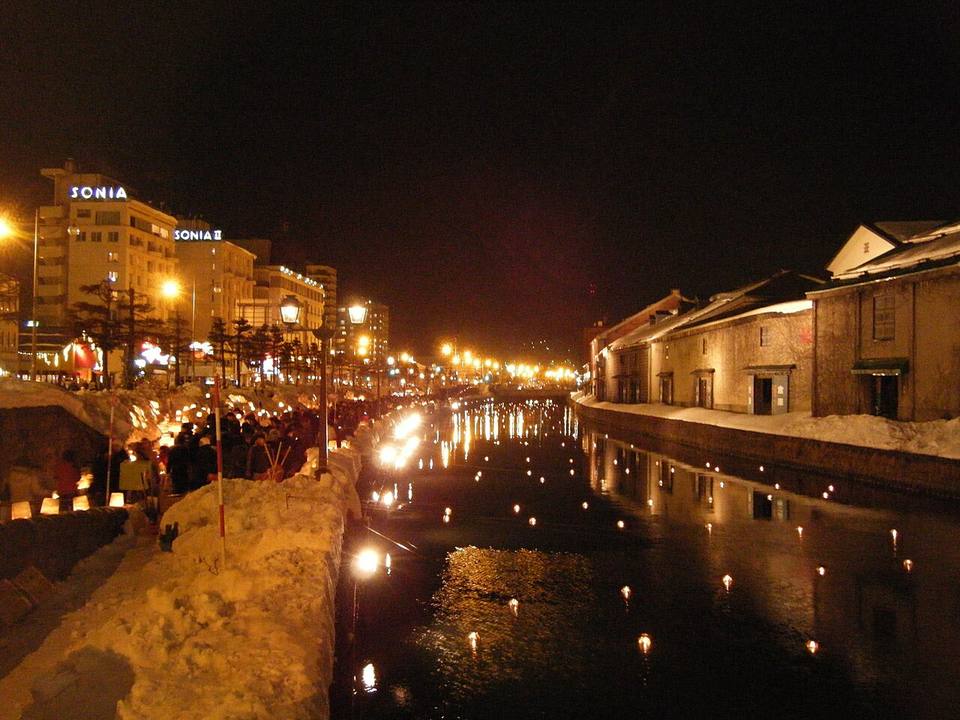
Hokkaido · Festival / Snow scenery
Otaru Snow Light Path
Usually held for about 8 days in mid-February each year (subject to official announcements each year), hundreds of thousands of candles link the canal and the disused railway into a river of light — held in the same period as the Sapporo Snow Festival, but a "quiet snow festival" of the opposite temperament.
Explore the local guide ↗Image source · 欅 · CC BY-SA 3.0
Source leads are being checked individually; confirm travel details with local official notices.