
Hokkaido · Festival / Snow scenery
Otaru Snow Light Path
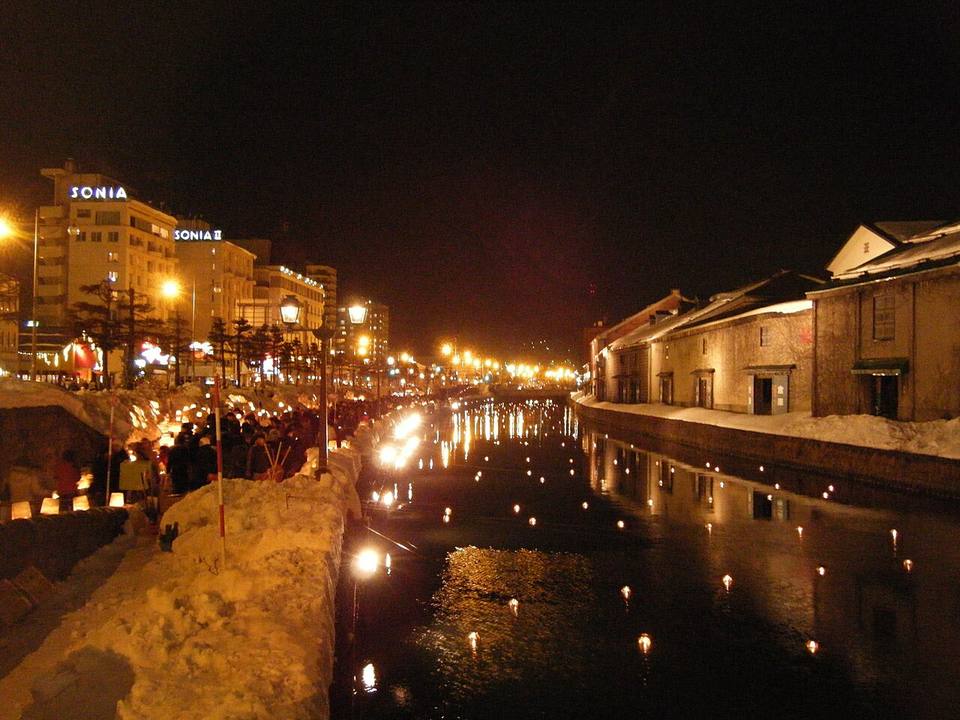
Usually held for about 8 days in mid-February each year (subject to official announcements each year), hundreds of thousands of candles link the canal and the disused railway into a river of light — held in the same period as the Sapporo Snow Festival, but a "quiet snow festival" of the opposite temperament.
Location
Otaru, Hokkaido
Stories and legends
No myths or legends; the festival's name was inspired by imagery from the poetry of Otaru poet Sei Ito — a literary origin.
History and context
Founded in 1999 on the concept of "handmade warmth": citizens and volunteers hand-make snow lanterns and light the candles themselves. The main venues are the Otaru Canal (about 300 meters from Asakusa Bridge to Chuo Bridge) and the former Temiya Line railway (about half a kilometer), lit daily from 17:00 to 21:00; glass fishing floats with candles drift on the canal water, echoing Otaru's herring-fishing history.
Local life
Otaru was once Hokkaido's finance and herring capital; its stone warehouses, old bank buildings, and sloping streets keep the skeleton of Meiji-Taishō prosperity. The Snow Light Path does not compete on scale but on the warmth of hands: residents place snow lanterns at their own doorsteps too, and the whole city is the venue. Compared with the Snow Festival's clamor, this place suits slow walking and listening to the snow — couples and photographers love it most.
Customs
Volunteers hold a lighting ceremony at dusk each day; the festival coincides with the Sapporo Snow Festival, and touring both together is the classic play.
Beliefs
No specific religious association; its main cultural identity is a citizen handmade festival and the historic scenery of a port city.
Local etiquette
Do not blow out or move the candles in others' snow lanterns for photos; the canal railings are slippery, so do not lean on them; tripods must not block the middle of the walkway.
Visiting notes
The usual timing is mid-February, partly overlapping the Snow Festival (in 2026, February 7–14; scheduled in 2027 for February 6–13; per the official site yukiakarinomichi.org); the JR train from Sapporo takes about 40 minutes, making a day trip possible, but the last trains are crowded — staying a night is more leisurely; the 17:00 lighting moment at the canal venue is the most stunning, so arrive 30 minutes early.
What to eat nearby
Otaru sushi (Sushi-dori street, where long-established shops such as Masazushi gather); seafood rice bowls; Otaru Beer (小樽ビール, brewed in a warehouse); LeTAO double fromage cheesecake (originated at the Otaru main store); Otaru-store limited sweets from Kitakarō and Rokkatei
Sushi-dori (Hanazonocho), the warehouse restaurant cluster around the canal, the Sakaimachi-dori shopping street
Old sushi shops are mostly counter seating, and overly strong perfume is considered an interference with the fish's flavor; at sweet shops, take just one sample
Sushi sets 3,000–6,000 yen (about 141–282 yuan, for reference only); seafood rice bowls 2,000–3,000 yen (about 94–141 yuan, for reference only)
The glass studios and music-box hall on Sakaimachi-dori are on the way for a stroll; during the Snow Light Path Festival, opening hours may be extended per shop announcements; check the rapid JR services back to Sapporo in advance.
Image source · 欅 · CC BY-SA 3.0