
Okinawa · Natural wonder / Coast
Cape Manzamo
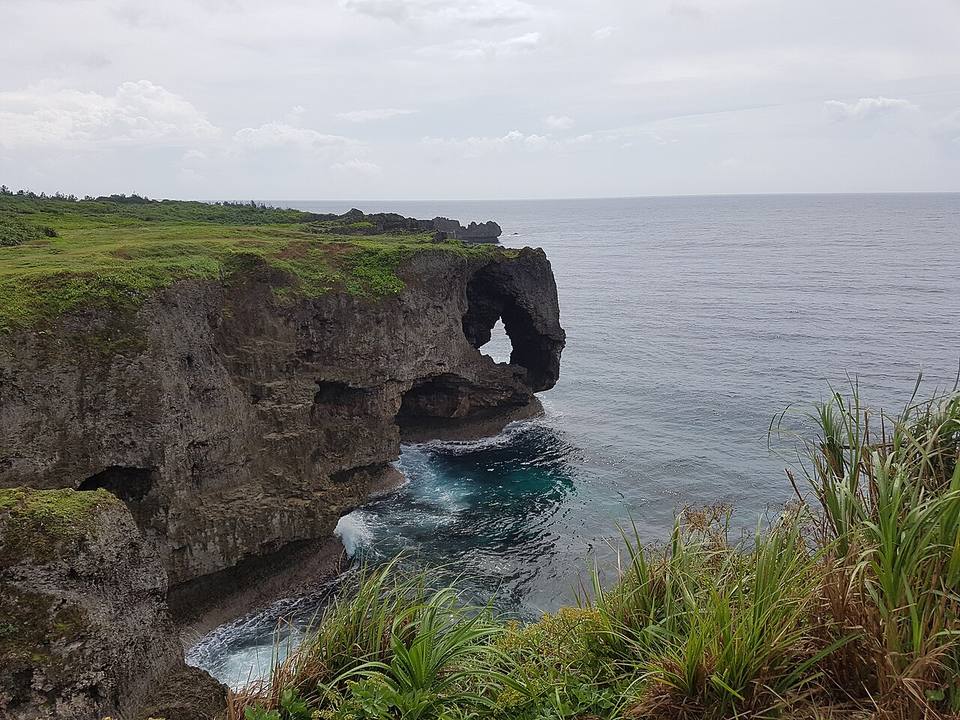
A raised coral cliff shaped like an elephant's trunk reaching into the East China Sea, with a grassland on top that could seat ten thousand people — a Ryukyu king's exclamation became the place name.
Location
Onna Village, Okinawa Prefecture
Stories and legends
Place-name legend: in the 18th century, King Shō Kei of Ryukyu toured here and praised it as "a field (毛, mō) where ten thousand could sit"; "Manzamo" (万座毛, "ten-thousand-seat field") took its name from that — a royal anecdote.
History and context
Manzamo is a raised coral-reef limestone cliff about 20 meters high, its elephant-trunk rock formed by sea erosion; the grassland on the cliff and the sea view are signature scenery of Okinawa Island's west coast. In 2020 a new visitor center and a ticket system (admission around the 100-yen level; per the official site) opened, with trails and viewing decks newly improved.
Local life
Manzamo is the face of Okinawa's "resort coast": high-end resort hotels line the Onna Village strip, yet the cliff top keeps a rough wildness — strong wind, flattened grass, and the sea in three layers of blue. Locals treat it as a public living room for sunsets and wedding photo shoots, while the farmers'-market vegetables sold at the visitor center pull it back into daily life.
Customs
The viewing deck gathers the most people in the hour before sunset; the grassland area is public space for strolling and photos.
Beliefs
No specific religious association; its main cultural identity is coral-reef coastal landforms and a Ryukyu royal anecdote.
Local etiquette
Cliff-edge winds are strong and beyond the rails is a sheer drop — never climb over; the grassland is a protected area, so do not leave the trails and trample it; drones must follow park rules.
Visiting notes
Best on a fine evening; 30–45 minutes is enough, combined on one line with Cape Zanpa and Ryukyu Mura; at noon the down-light makes the sea bluest but the crowds thickest — a trade-off between light and people.
What to eat nearby
Seafood rice bowls and sea urchin (in season); Okinawa soba; Okinawan tempura and sata andagi (サーターアンダギー, Okinawan fried doughnuts) at the Onna roadside station; Agu pork barbecue; sea-grape salad
The Kyoda / Onna roadside-station areas, the dining street of the Onna resort zone, diners around Yomitan
Freshly fried sata andagi are mouth-scalding — the most local pairing is unsweetened tea; outside sea-urchin season (summer) most urchin is imported, so ask the origin before ordering
Set meals 1,300–2,200 yen (about 61–103 yuan, for reference only)
Visitor-center parking fees and reservation policies change often — check the official site before setting out; trail lighting is limited after sunset, so do not linger at the cliff edge.
Source leads: Onna Village official tourism, Cape Manzamo official site (designated management by Okinawa Prefecture / Onna Village).
Image source · Mokkie · CC BY-SA 3.0