
Kyushu · Hot spring / Signature experience
Ibusuki Sand-Bath Onsen
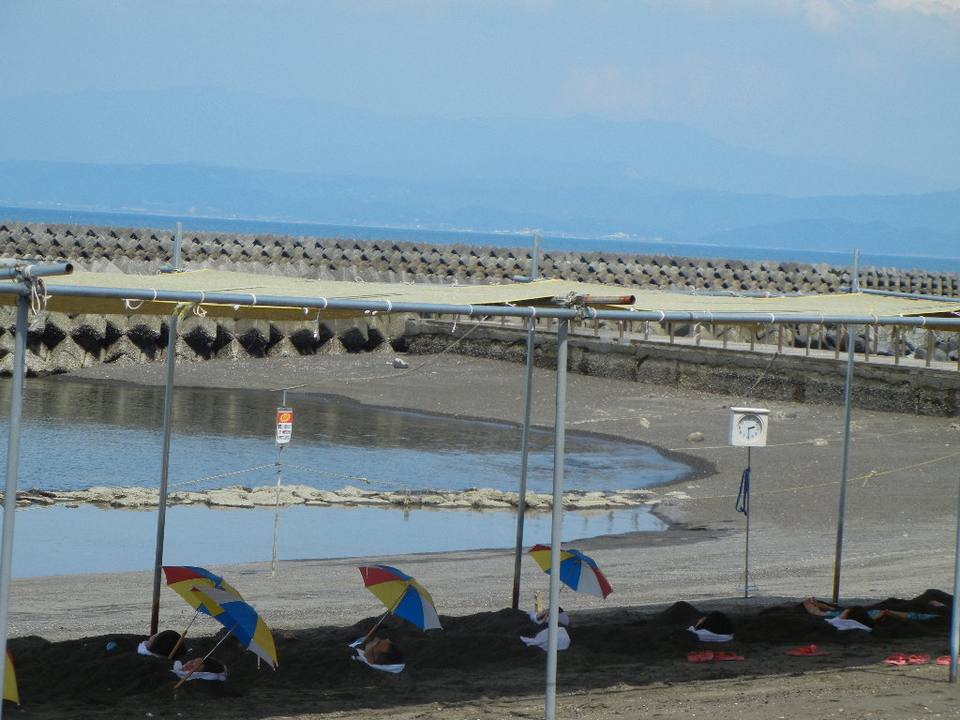
Put on a yukata, lie down in black sand heated by geothermal steam, and be buried for 10 minutes until you sweat all over like in a sauna — a rare natural sand bath, run at scale only on this coast.
Location
Ibusuki, Kagoshima Prefecture
Stories and legends
The name Ibusuki is said to derive from "Yutakayado" (a lodging rich in hot water), alongside hot-spring convalescence legends; several etymologies coexist.
History and context
Groundwater springs beneath Ibusuki's coast heat the sand to 50–55°C, and the sand bath's history traces back to Edo-period convalescence records. The standard flow: change into a yukata → staff shovel sand over you (only your head out, on a towel) → stay buried about 10 minutes (judged by your own sense of heating) → get up and rinse → then soak in a regular onsen. The sand's weight promotes sweating; official sources and operators alike warn that it is unsuitable for those with heart disease, high blood pressure, or during pregnancy.
Local life
Ibusuki is southern Kyushu's "Hawaiian-style" onsen town: subtropical flowers and trees, Mount Kaimon (the "Satsuma Fuji"), and seaside ryokan form its lazy base note; the sand-bath scene, though, is deeply ritual — a row of heads poking out of the sand alongside the sound of waves is one of the most picturesque oddities in Japanese onsen culture. Locals treat it as detox and health care, not novelty hunting.
Customs
After the sand bath, soaking in the onsen and rehydrating is the fixed finish; the representative facility on the beach is the "Saraku" sand-bath hall (砂むし会館砂楽).
Beliefs
No specific religious association; its main cultural identity is geothermal convalescence culture.
Local etiquette
Do not stay buried on your own if you feel unwell (if dizzy, signal the staff at once); do not take phones and other electronics into the sand (heat and grains damage them); tattoo rules follow each facility's notices — confirm first; if sand gets in your eyes, do not rub — handle it at the rinse area after getting up.
Visiting notes
Available in all seasons; at midday in summer the sand surface overheats, so choose the morning or evening sessions; the whole process takes about an hour — check opening hours and sea conditions on the official site in advance; to avoid tour groups, take the first session on a weekday.
What to eat nearby
Kurobuta black pork dishes (黒豚しゃぶ shabu / とんかつ tonkatsu, Kagoshima black pork); onsen egg dishes and hot-spring-steamed vegetables; Ibusuki ramen / Kagoshima ramen (pork-bone and chicken-broth style); Satsuma shochu (芋焼酎, sweet-potato shochu — drink it at proper izakaya, in moderation); southern-fruit sweets such as mango
The shopping street in front of Ibusuki Station, seaside restaurants around the sand-bath hall, Tenmonkan in Kagoshima City (if passing through)
The local way to drink shochu is often cut with hot water (お湯割り, oyu-wari) — smell the aroma first; in black-pork shabu, cook the meat first, then the vegetables, and do not overcook
Black-pork sets 2,500–4,000 yen (about 118–188 yuan, for reference only)
The sea-view stretch of the JR Ibusuki-Makurazaki Line is itself worth riding; you will feel sleepy after the sand bath, so do not drive long distances immediately.
Source leads: Ibusuki City official tourism, Saraku sand-bath hall official site, JNTO Kagoshima introduction.
Image source · NY066 · CC BY-SA 3.0