
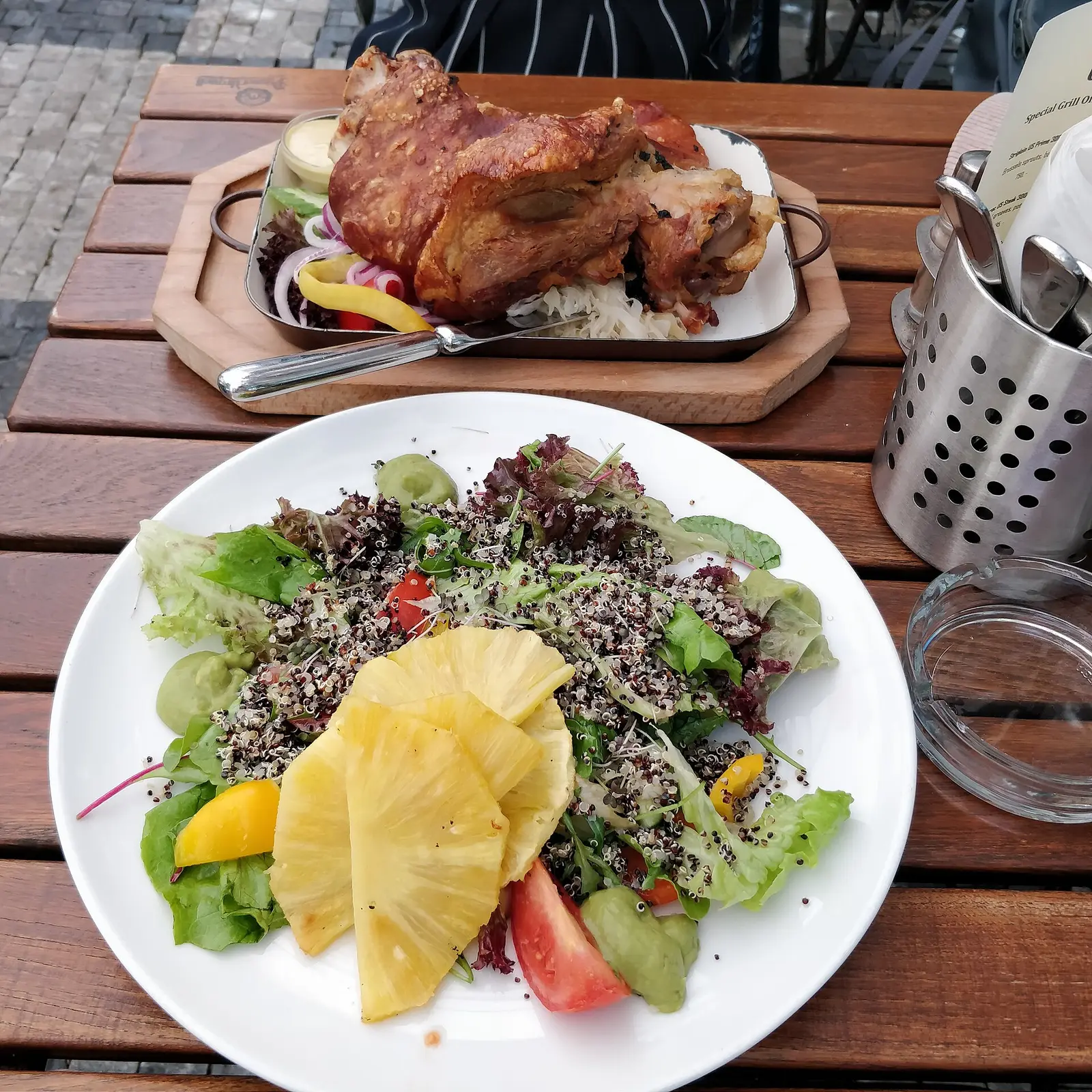
Prague roast pork knuckle
Pečené vepřové koleno · Prague, Czechia
A whole pork knuckle roasted until the skin is crisp, served with mustard, horseradish and bread, is a hearty dish in Prague's beer halls.
Know before you go
- Do not order pork knuckle without checking its weight and price on the menu (many places charge by weight, and one often exceeds a kilogram)
- do not clink glasses in a beer hall without looking the other person in the eye (locals believe you should make eye contact when toasting)
- around the Old Town Square, do not be lured by touts into tourist-only restaurants without checking the price list.
This article is Not yet verified. Please check official announcements for prices, opening hours and dates.
Culture
Culture & customs
Background
Roast pork knuckle is a whole pork knuckle roasted until the skin is crisp, usually served with mustard, horseradish and bread, and sometimes brought to the table whole on a metal skewer. Czech Wikipedia explains that roast pork knuckle is considered a traditional Bavarian dish (Schweinshaxe in German), called Stelze in Austria, and is just as popular in the Czech Republic; the knuckle is usually marinated or pre-boiled, then roasted until the skin blisters and crisps, and can be served with potato dumplings and red cabbage, or with sauerkraut and potatoes. English Wikipedia notes that northern Germany has another version that is cured and then boiled (Eisbein). In Prague, roast pork knuckle is a large dish on the menus of traditional beer halls and restaurants, often shared among several people, with local Pilsner-style beer.
Local customs
- One pork knuckle is a large portion, often shared by two or three people
- once served, cut the meat off the bone with a knife and slice the skin
- eat it with mustard and horseradish, with pickles or bread to cut the richness
- in Czech beer halls, the server keeps your tab on your beer mat or a slip of paper, and everything is settled together at the end.
Religion & beliefs
- Roast pork knuckle has nothing to do with religion
- it belongs to the meat-eating and beer hall culture of Central Europe, and Czech beer halls are places for everyday socialising among locals. It is a pork dish and does not suit travellers with halal or kosher dietary needs, who can order beef goulash (guláš) or other dishes instead.
Etiquette & taboos
Etiquette & taboos
Don’t DON'T
- Do not order pork knuckle without checking its weight and price on the menu (many places charge by weight, and one often exceeds a kilogram)
- do not clink glasses in a beer hall without looking the other person in the eye (locals believe you should make eye contact when toasting)
- around the Old Town Square, do not be lured by touts into tourist-only restaurants without checking the price list.
Locals appreciate DO
- Czechs appreciate guests who share a pork knuckle among several people and chat slowly over beer
- in beer halls the waiter may refill your glass as soon as it is empty, so if you don't want more, the clearest signal is to place your beer mat on top of the glass. You can also say "Na zdraví" (cheers).
Plan your visit
Practical info
Travel tips
- Traditional beer halls and restaurants in Prague's Old Town, Lesser Town and New Town serve roast pork knuckle
- a meal takes about an hour and a half, and popular places can be booked for dinner. Before ordering, check whether the price is per 100 grams or for the whole knuckle, and ask the server to confirm the weight if needed. You can combine it with Old Town Square, Charles Bridge and the Lesser Town. Dietary notes: the knuckle is pork and high in fat, so it is unsuitable for those who don't eat pork
- the accompanying bread and dumplings contain gluten
- Czech beer halls center on beer, and drivers must not drink (the Czech Republic has zero tolerance for drunk driving), but you can order non-alcoholic beer. Prices and opening hours are as set by each shop
- popular old establishments often have queues, so avoiding peak mealtimes is more relaxed.
How do you like this place?
More nearby
Also in Czechia
Nearby sights
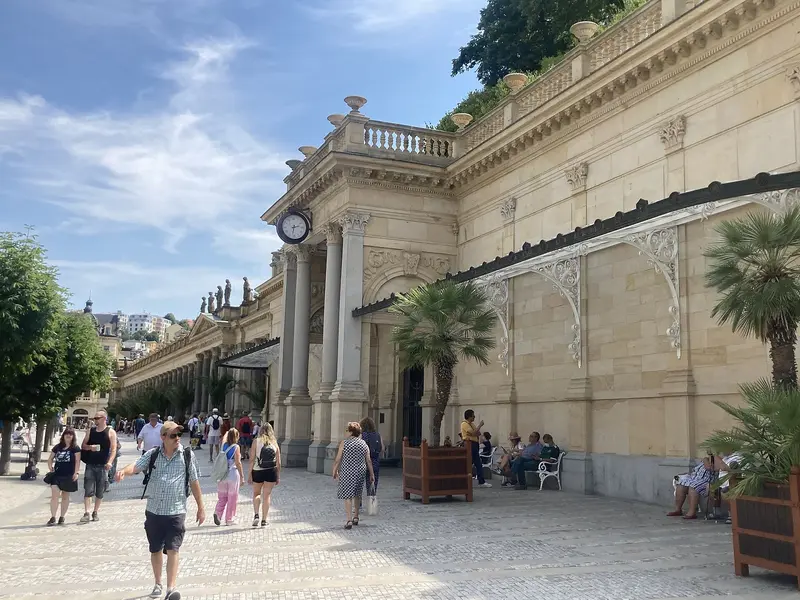
Karlovy Vary
Five spa colonnades line the valley, where you can sip springs of different temperatures and mineral content from a special spa cup as you strol…
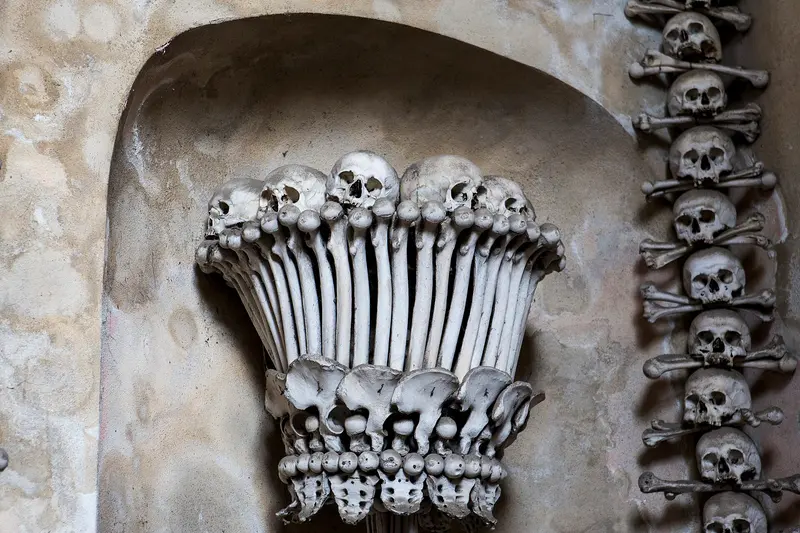
Sedlec Ossuary
Beneath the Cemetery Church of All Saints, the bones of an estimated 40,000 to 70,000 people form a chandelier, bone pyramids, garlands and the …
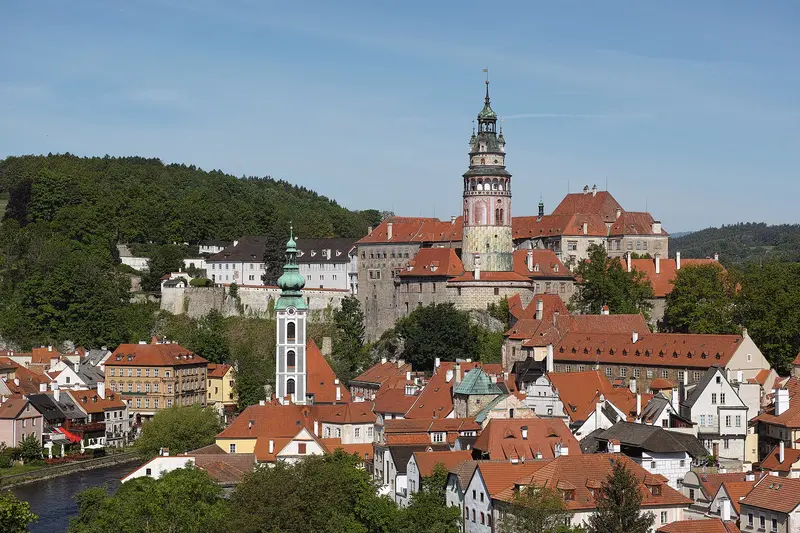
Český Krumlov
A medieval town wrapped in a bend of the Vltava, with the second-largest castle complex in Czechia after Prague Castle: 40 buildings around 5 co…
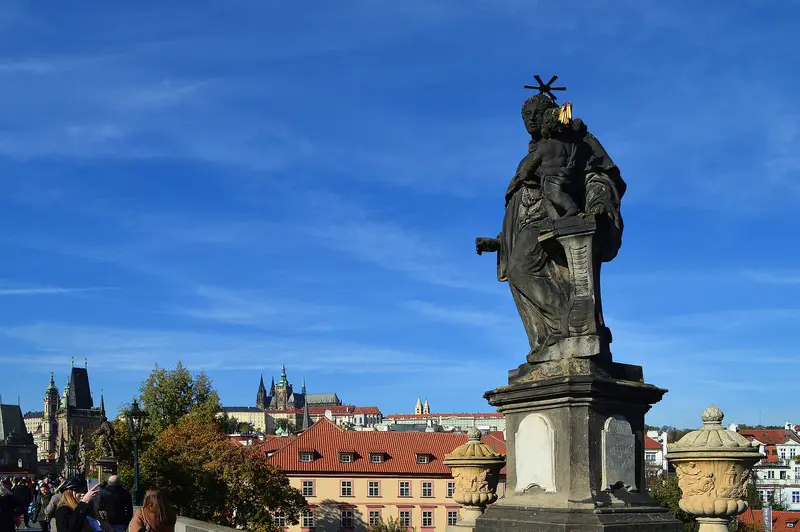
Prague Castle and Charles Bridge
A castle that has never clocked off, and a stone bridge whose construction began at a palindromic moment
Local legends
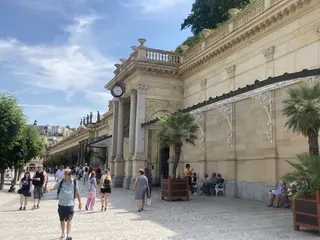 Karlovy VaryThe spring found by a houndLegend has it that while Charles IV was hunting in the nearby forests in the 14th century, one o…
 Český KrumlovThe White LadyLegend has it that a White Lady appears in the castle from time to time, said to be the ghost of…Český KrumlovBears in the moatThe castle moat holds no water, but bears. One account says the Rosenbergs kept them to signal a…
 Prague Castle and Charles BridgeStories of Prague Castle and Charles BridgeThe most-touched spot on Charles Bridge is the statue of St John of Nepomuk (Jan Nepomucký) at t…