
Gyeongbokgung Palace
경복궁 景福宮 · Jongno-gu, Seoul Special City, Korea
The first main palace of the Joseon dynasty, where King Sejong created the Korean alphabet; three gates and three courts unfold along its central axis
Know before you go
- Do not climb on stone balustrades, terraces or building platforms
- smoking and open flames are strictly forbidden inside the wooden palace buildings
- do not enter fenced-off restoration work areas.
Culture
Culture & customs
Background
Gyeongbokgung was completed in 1395 as the first royal palace after the Joseon dynasty made Hanyang its capital; its name was chosen by the founding statesman Jeong Do-jeon from the Book of Songs: "Having drunk your wine and been filled with your virtue, may you, noble one, live ten thousand years, blessed with great fortune (gyeongbok)." The main buildings are laid out symmetrically along a north–south axis, following the "three gates and three courts" of the Kaogong Ji in the Rites of Zhou: Gwanghwamun and the outer court, Geunjeongmun and the governing court (with the throne hall, Geunjeongjeon), and Hyangomun and the inner court (the living quarters of the king and royal family). Under King Sejong the palace had the Jagyeongnu self-striking water clock, an observatory and the Jiphyeonjeon, and Hangeul was created here. The palace was completely destroyed in the Imjin War of 1592 and lay in ruins for about 270 years, until Heungseon Daewongun rebuilt it in 1865–1868; in 1887 Korea's first electric light was switched on here. During Japanese colonial rule only 40 of about 500 buildings were left, and the Japanese Government-General Building was erected in front of the palace; after it was demolished in 1995–1996, restoration work has continued to this day.
Local customs
- The Royal Guard Changing Ceremony is held at the palace gate twice a day (revived as a reenactment in 2002)
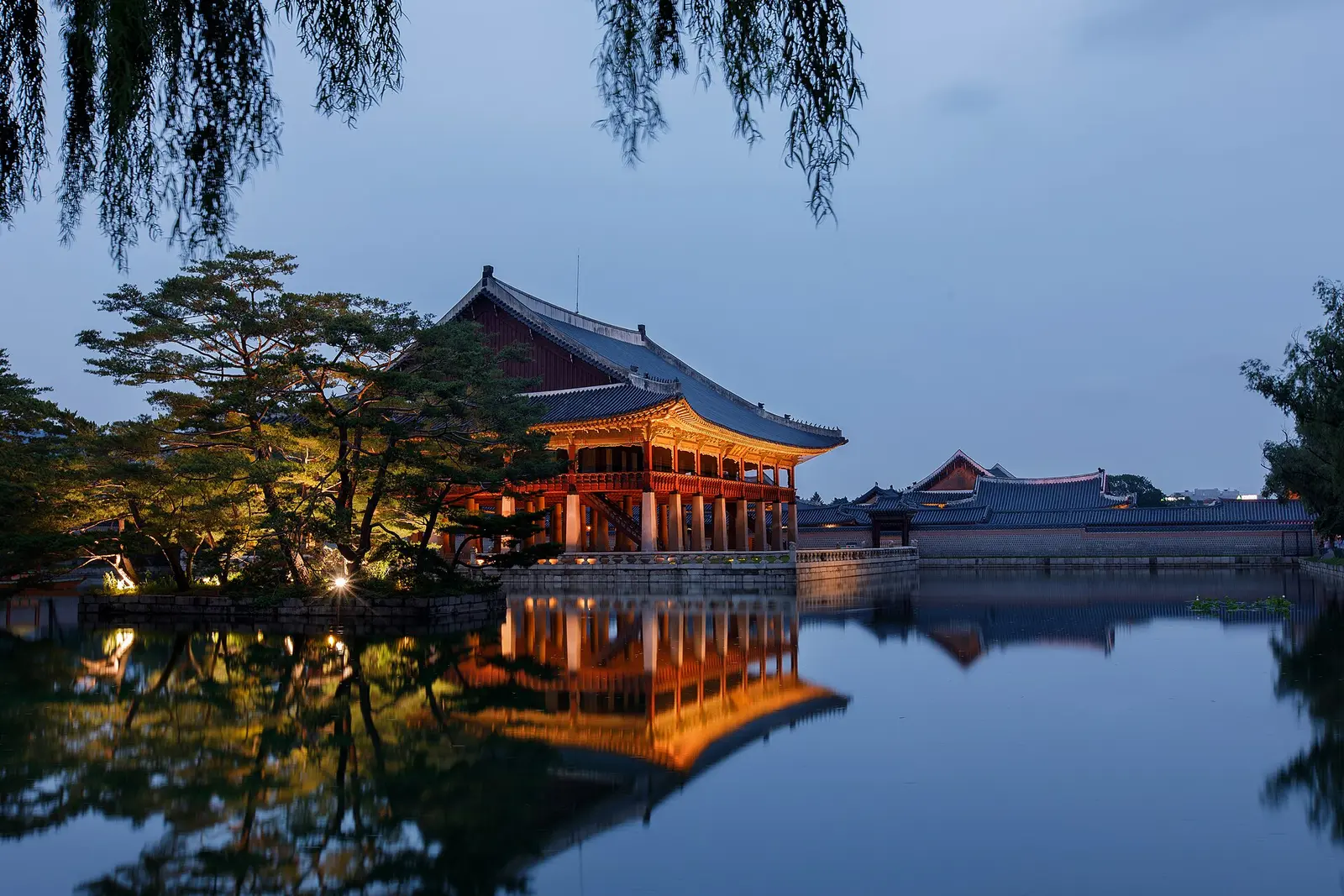
- since 2013, visitors wearing hanbok have entered the palace free, which has spawned many hanbok rental shops around the gates, and in 2024 some 1.8 million visitors entered in hanbok. On certain days each year the palace opens for night viewing, when Gyeonghoeru Pavilion reflected in its pond is the most popular sight. Geunjeongjeon Hall appeared on the back of the 1973–1983 series of the 10,000-won note, and Gyeonghoeru on the 1983–2007 series.
Religion & beliefs
- The palace is Confucian ritual architecture with no religious activities
- within the grounds are the National Folk Museum of Korea and the National Palace Museum of Korea, where you can learn about the life of the Joseon royal family and ordinary people.
Etiquette & taboos
Etiquette & taboos
Don’t DON'T
- Do not climb on stone balustrades, terraces or building platforms
- smoking and open flames are strictly forbidden inside the wooden palace buildings
- do not enter fenced-off restoration work areas.
Locals appreciate DO
- Entering in hanbok is both an experience and gets you in free, but take care not to block the paths when taking photos
- walking the central axis from Gwanghwamun to Geunjeongjeon, Sajeongjeon and then Gyeonghoeru is the best way to understand the "three gates and three courts" layout
- add the National Palace Museum of Korea to your itinerary to see royal artifacts
Plan your visit
Practical info
Travel tips
- Gyeongbokgung is closed every Tuesday (if a Tuesday is a public holiday it stays open and closes on the next non-holiday day instead). Opening hours vary by season: about 9:00–17:00 from November to February, about 9:00–18:00 from March to May and September to October, and about 9:00–18:30 from June to August, with last entry one hour before closing
- check the official website of the Royal Palaces and Tombs Center, Korea Heritage Service. Gyeongbokgung Station on Subway Line 3 is right at the palace, and since 2018 all four gates (east, south, west and north) can be used to enter and exit. Allow at least 2–3 hours, or half a day if you add the museums.
Photos
Photos
Sjmole · CC BY-SA 4.0
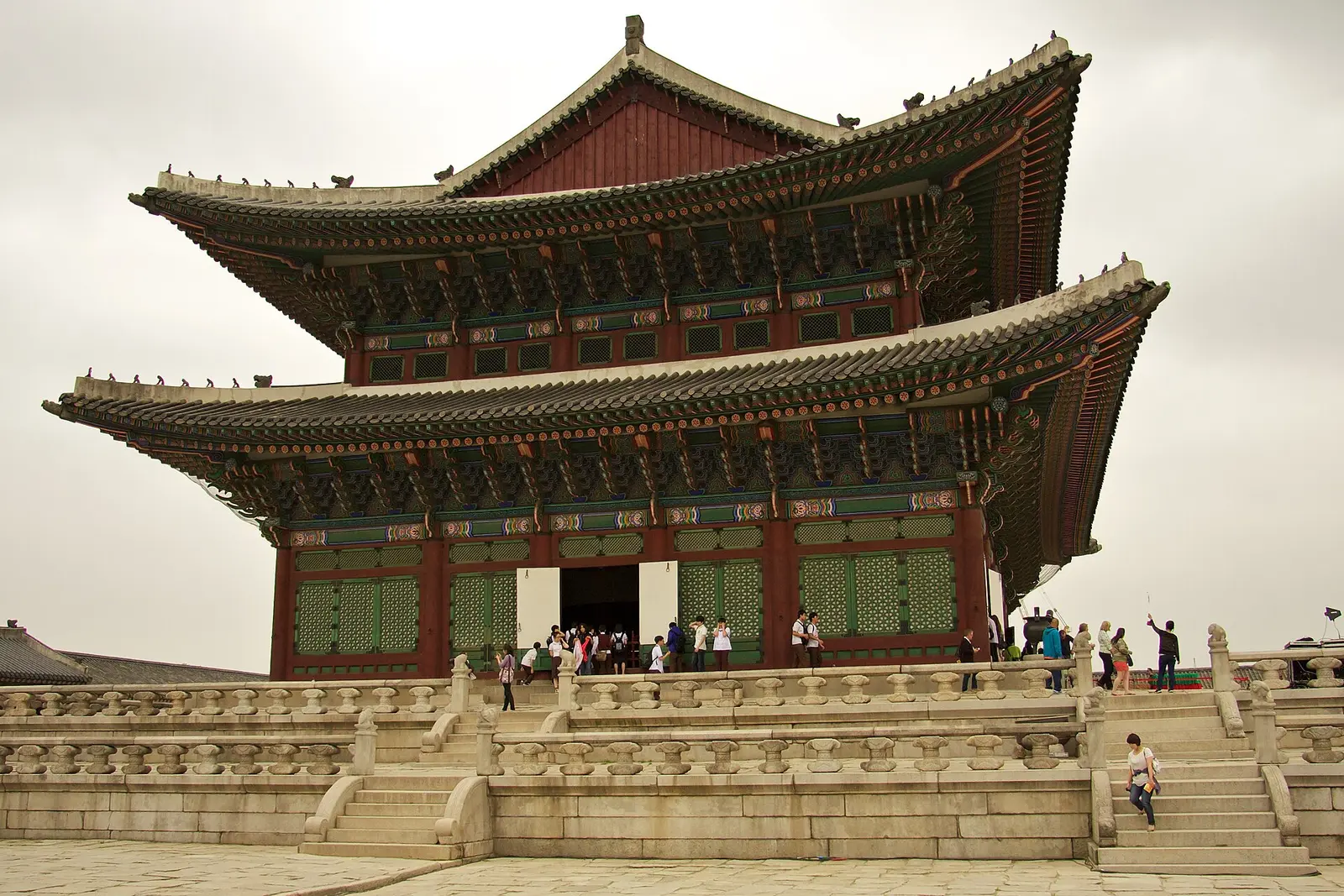
Mario Sánchez Prada · CC BY-SA 2.0
Sources & verification notes
Royal Palaces and Tombs Center, Korea Heritage Service: Visiting hours
How do you like this place?
More nearby
Also in Seoul
Nearby sights
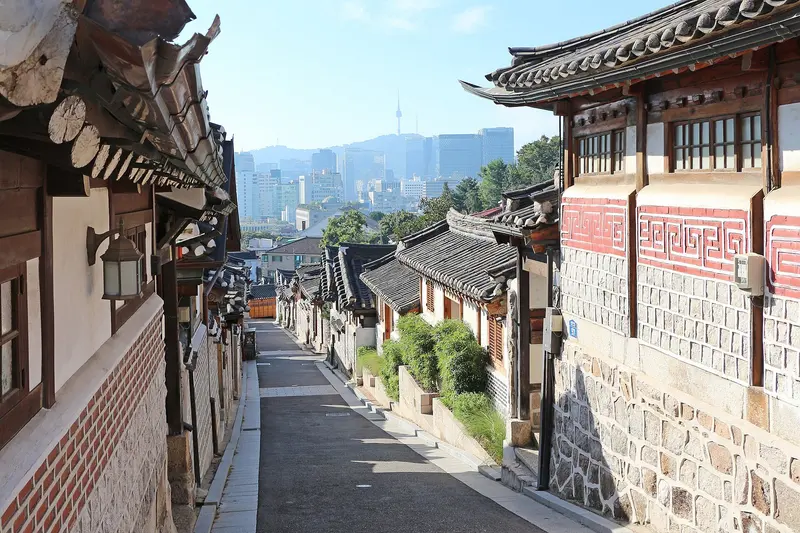
Bukchon Hanok Village
Hanok alleys between Gyeongbokgung and Changdeokgung, where people still live under century-old tiled roofs
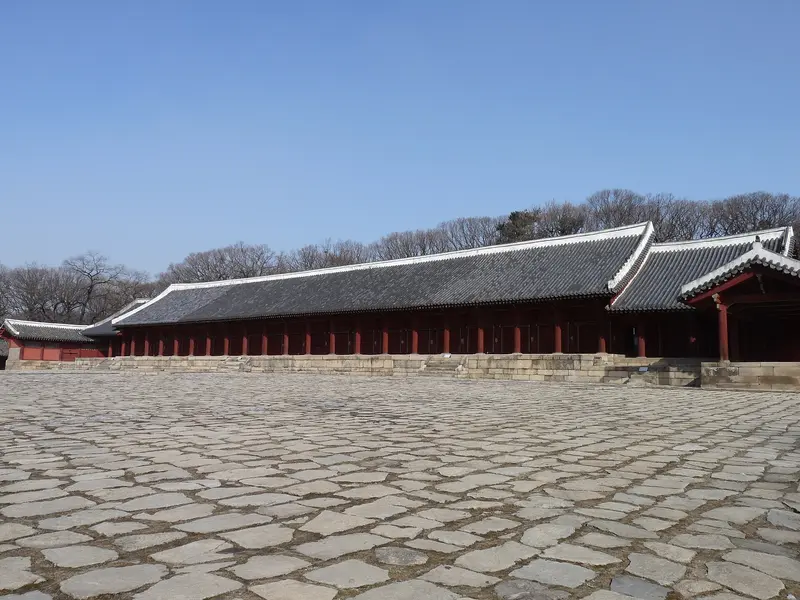
Jongmyo Shrine
The Confucian royal shrine holding the spirit tablets of the Joseon kings, where the ancestral rites and their ritual music continue to this day
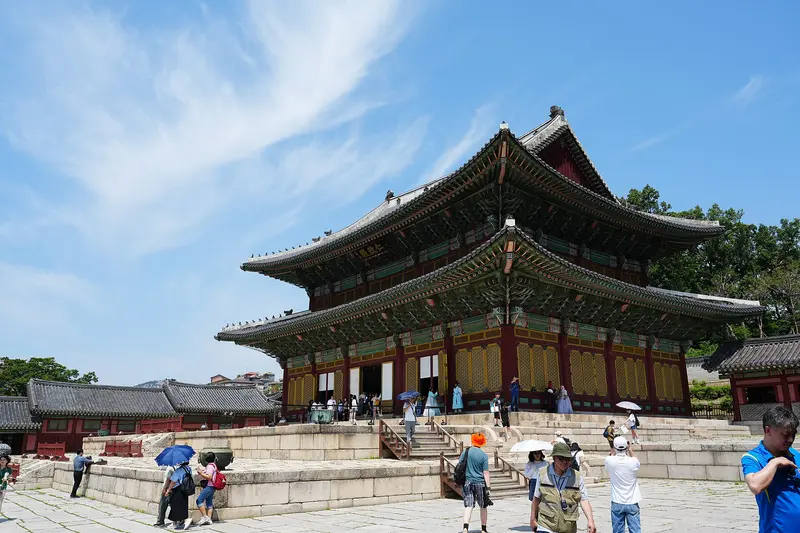
Changdeokgung Palace
The palace where the most Joseon kings actually lived, built to follow the lie of the hills, with a rear garden of 300-year-old trees