
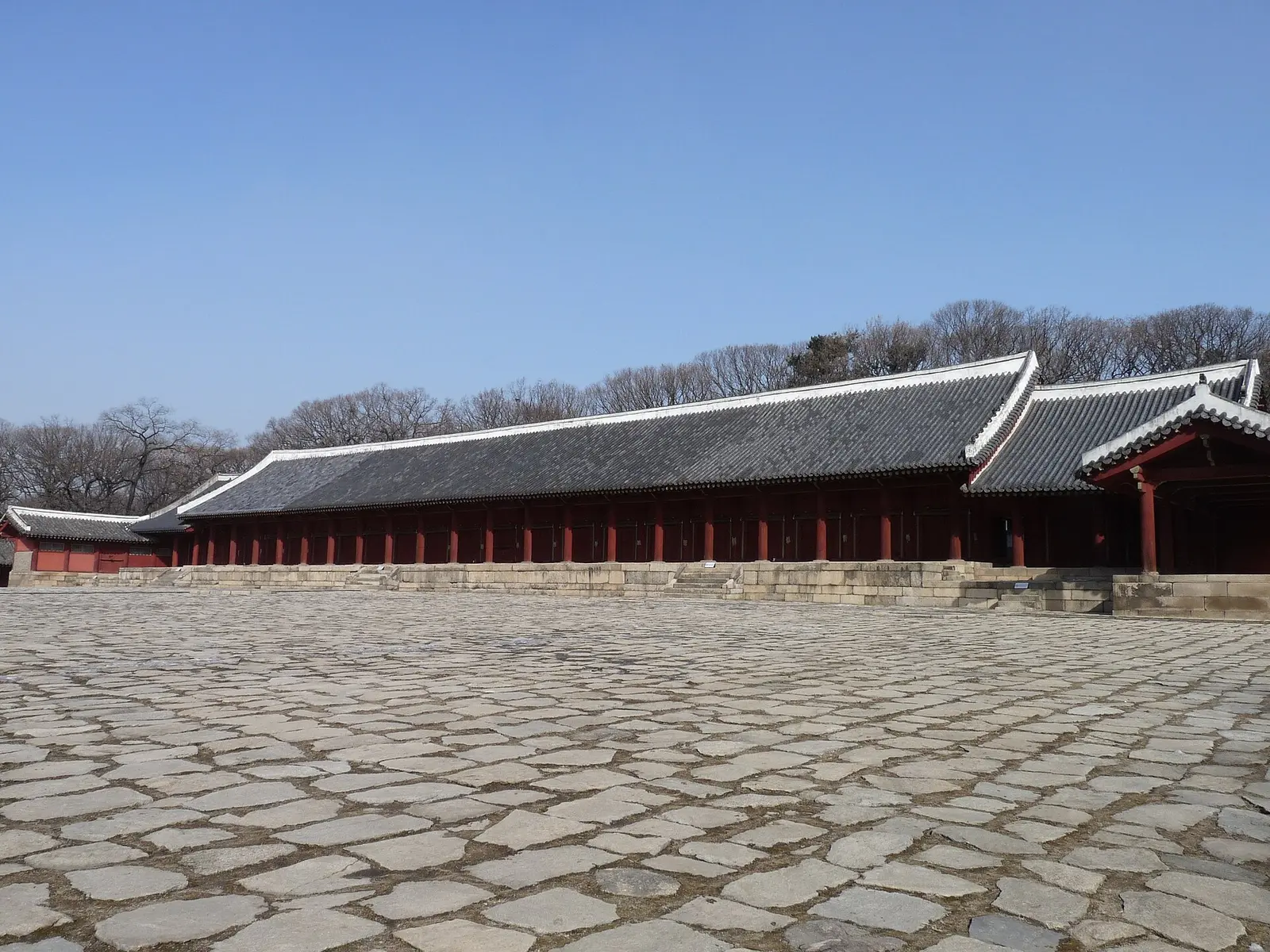
Jongmyo Shrine
종묘 宗廟 · Jongno-gu, Seoul Special City, Korea
The Confucian royal shrine holding the spirit tablets of the Joseon kings, where the ancestral rites and their ritual music continue to this day
Know before you go
- Do not walk on the raised "spirit path" running through the middle of the stone terrace and courtyard, which is reserved for the spirits
- do not make noise or fool around in front of the main hall
Culture
Culture & customs
Background
Jongmyo is the Confucian royal shrine where the Joseon dynasty honored its deceased kings and queens. It was built in 1394 when King Taejo moved the capital to Hanyang, following the ritual principle of "shrine on the left, altar on the right": seen from the main hall of Gyeongbokgung, Jongmyo is on the king's left and the Sajikdan altar on his right. The main hall originally had seven chambers and was extended from west to east as more spirit tablets were enshrined; Yeongnyeongjeon Hall was added under King Sejong. The original buildings were burned in the Imjin War and rebuilt in 1601, surviving to this day; the spirit tablets were saved by being hidden in a commoner's house. Today the main hall enshrines the tablets of 19 kings and 30 queens, and Yeongnyeongjeon those of 16 kings and 18 queens. The main hall is Korea's longest traditional wooden building, with a stone terrace in front 150 m long and 100 m wide. It was inscribed as a World Heritage site in 1995, and UNESCO calls it the oldest surviving royal Confucian shrine.
Local customs
- Jongmyo Daeje (종묘대제) is held on the first Sunday of May each year, led by descendants from the Jeonju Lee Royal Family Association, with musicians from the National Gugak Center and dancers from the National Gugak High School performing Jongmyo Jeryeak ritual music and the ilmu line dance
- the Jongmyo ritual and its music are both Important Intangible Cultural Heritage, and the music derives from court music composed by King Sejong in 1447 and 1462.
Religion & beliefs
- A Confucian ancestral shrine. The south gate, Sinmun, is for the spirits to pass through
- the east gate is for the king and the west gate for the ritual musicians. The halls hold spirit tablets, so please keep quiet during your visit.
Etiquette & taboos
Etiquette & taboos
Don’t DON'T
- Do not walk on the raised "spirit path" running through the middle of the stone terrace and courtyard, which is reserved for the spirits
- do not make noise or fool around in front of the main hall
Locals appreciate DO
- If you are in Seoul in early May, plan to see the Jongmyo Jerye royal ancestral rite
- on weekdays, joining a guided tour to understand the spirit gate, the royal path and the layout of the main hall is far more rewarding than a quick look around
Plan your visit
Practical info
Travel tips
- Jongmyo is closed every Tuesday (moved to the next day if it falls on a public holiday). Wednesdays, Saturdays, Sundays and public holidays are free-visit days
- Mondays, Thursdays and Fridays are timed-entry days, when you enter in set time slots, with guided tour times listed on the official website. Opening hours are roughly 9:00 to 17:30–18:30, varying by season. The Bukshinmun gate on the north side, across Yulgok-ro, connects to Changdeokgung and Changgyeonggung. It is in the Jongno area and can be combined on foot with Changdeokgung and Bukchon. Allow about 1–1.5 hours.
Photos
Photos
João Trindade · CC BY 2.0
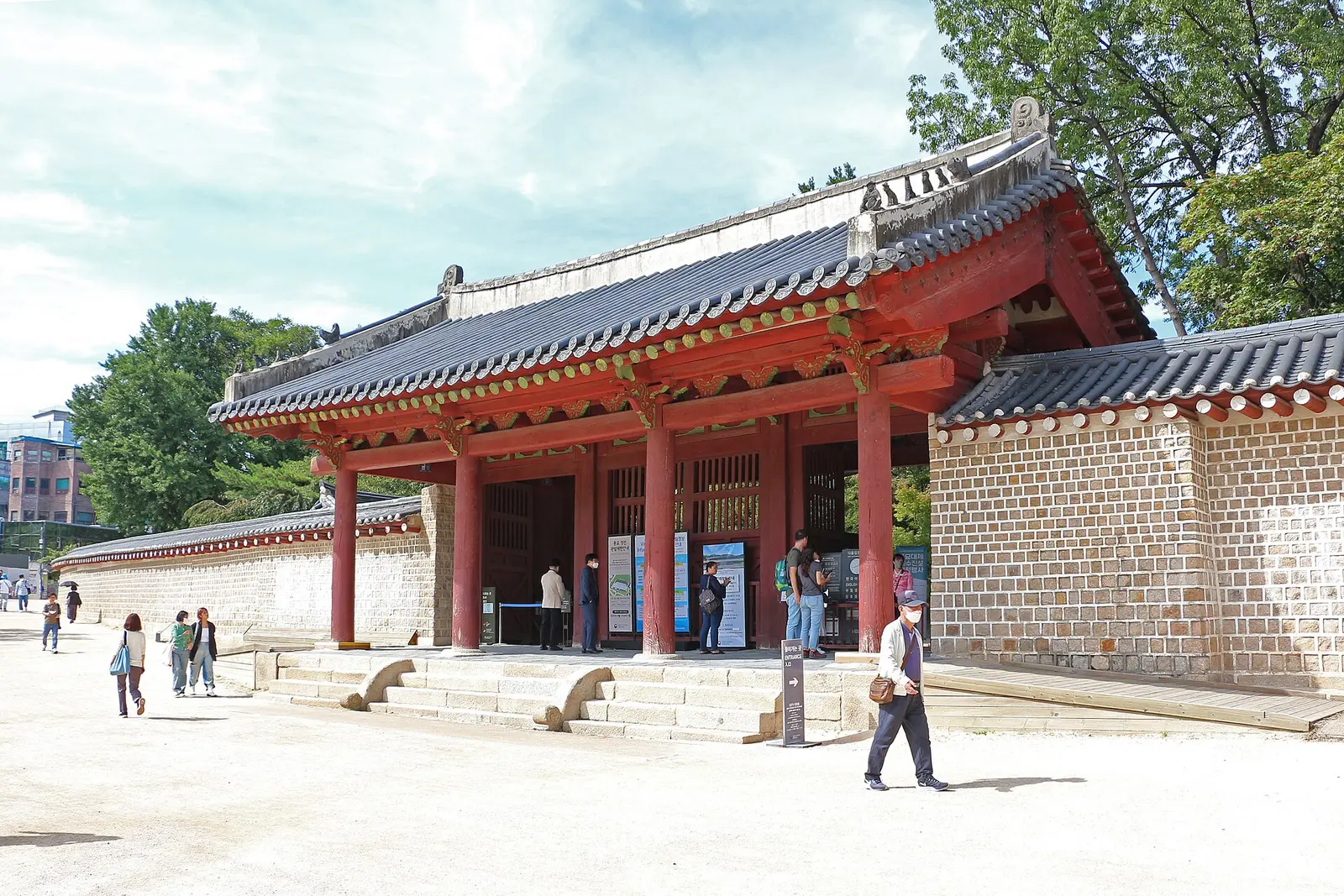
Bgag · CC0
How do you like this place?
More nearby
Also in Seoul
Nearby sights
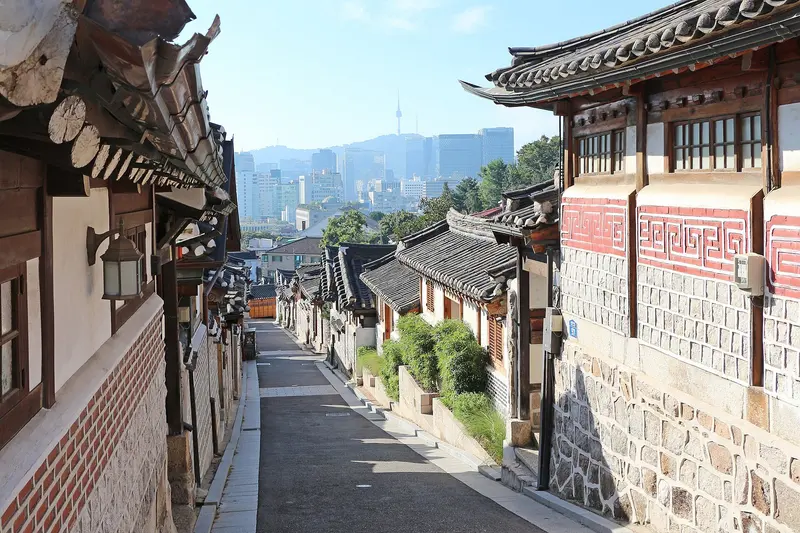
Bukchon Hanok Village
Hanok alleys between Gyeongbokgung and Changdeokgung, where people still live under century-old tiled roofs
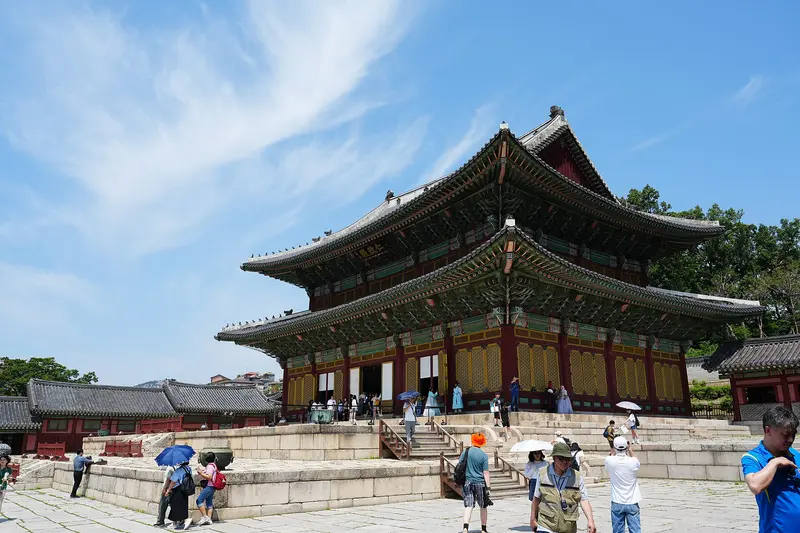
Changdeokgung Palace
The palace where the most Joseon kings actually lived, built to follow the lie of the hills, with a rear garden of 300-year-old trees
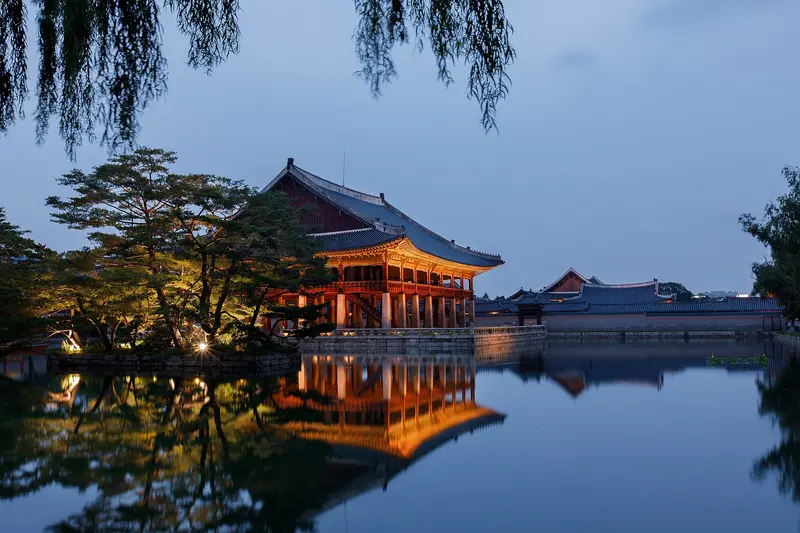
Gyeongbokgung Palace
The first main palace of the Joseon dynasty, where King Sejong created the Korean alphabet; three gates and three courts unfold along its centra…