
Hokkaido · Zoo / Family science education
Asahiyama Zoo
Japan's northernmost zoo, famous for "behavioral exhibits" — the animals act according to their nature, and people are just quiet observers.
Location
Asahikawa, Hokkaido
Stories and legends
No myths or legends; the widely told story is the real-life comeback of "a zoo on the verge of closure that turned itself around with the penguin walk," an actual event rather than a legend.
History and context
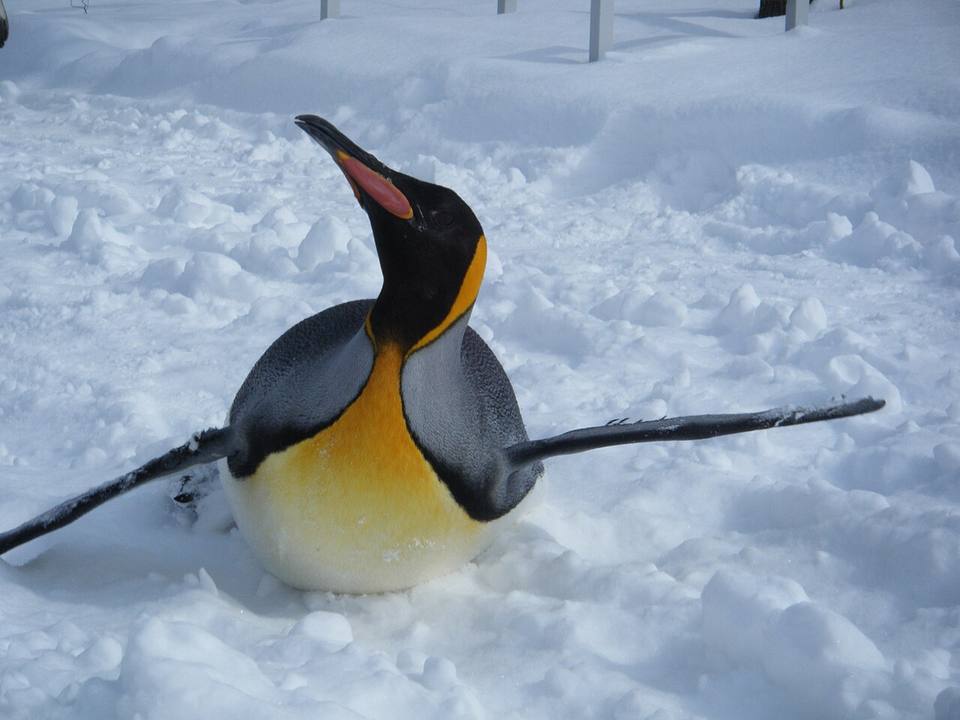
Opened in 1967, the zoo's visitor numbers plunged in the 1990s and it nearly closed; director Masao Kosuge pushed the "behavioral exhibit" reforms: a cylindrical tank in the seal house lets seals swim up and down through it, and the polar bear house lets the bears dive for food. Around 2004 its annual attendance at one point surpassed Ueno Zoo's. The winter "penguin walk" (ペンギンの散歩) began as a remedy for the penguins' lack of exercise; the birds parade along a snow path at set times each day.
Local life
Asahiyama's ethos is "restrained human design, unrestrained animal nature": exhibit signs are mostly hand-drawn by the keepers, noting each animal's name, personality, and condition that day, like a neighborhood notice board. Asahikawa sits inland in Hokkaido, where winter temperatures reach -20°C, and the animals are actually most active in the snow — a direct result of the severe inland basin climate. Local families treat a winter visit to Asahiyama as a seasonal ritual, and the zoo's hot drinks and rest-lounge culture also grew out of sightseeing in extreme cold.
Customs
During the penguin walk, everyone crouches or stands behind the guard line, uses no flash, and reaches out no hands — this has become the visitors' unspoken rule.
Beliefs
No specific religious association; its main cultural identity is nature education and animal-ethics practice.
Local etiquette
Flash photography and drones are strictly forbidden; do not knock on the glass or feed the animals your own food; stepping onto the walk route or chasing the penguins will draw a stop from staff and may cause the event to be cancelled.
Visiting notes
Best from late December to March, the snow season (the penguin walk usually runs in this season, about twice a day, per the official schedule); enter at opening and head straight for the popular houses, as crowds peak in the afternoon; a direct bus from Asahikawa Station takes about 40 minutes.
What to eat nearby
Asahikawa ramen (旭川ラーメン, soy-sauce broth with a double soup of pork bone and seafood, thin curly noodles that carry the rich broth); jingisukan grilled lamb (ジンギスカン); shinko-yaki (新子焼き, half a grilled chicken, an Asahikawa specialty); shio horumon (塩ホルモン, salt-seasoned grilled offal) around Asahikawa Station
Asahikawa Ramen Village (an area gathering many famous shops), the commercial district in front of Asahikawa Station, along Heiwa-dori Shopping Park
Most ramen shops have you buy a meal ticket first; jingisukan uses a dedicated domed iron griddle, and lining vegetables around the edge to soak up the meat juices is the local way to eat it
Ramen 900–1,300 yen (about 42–61 yuan, for reference only); grilled lamb set meal 2,000–3,000 yen (about 95–141 yuan, for reference only)
The Ramen Village is on the way from the zoo, so plan them for the same day; winter buses are easily delayed by snow, so leave ample margin for the return trip.
Source leads: Asahiyama Zoo official site, Asahikawa City official tourism information, JNTO Asahikawa introduction.
Image source · 欅 (Keyaki) · CC BY-SA 3.0