
Hokkaido · Night view / Cityscape
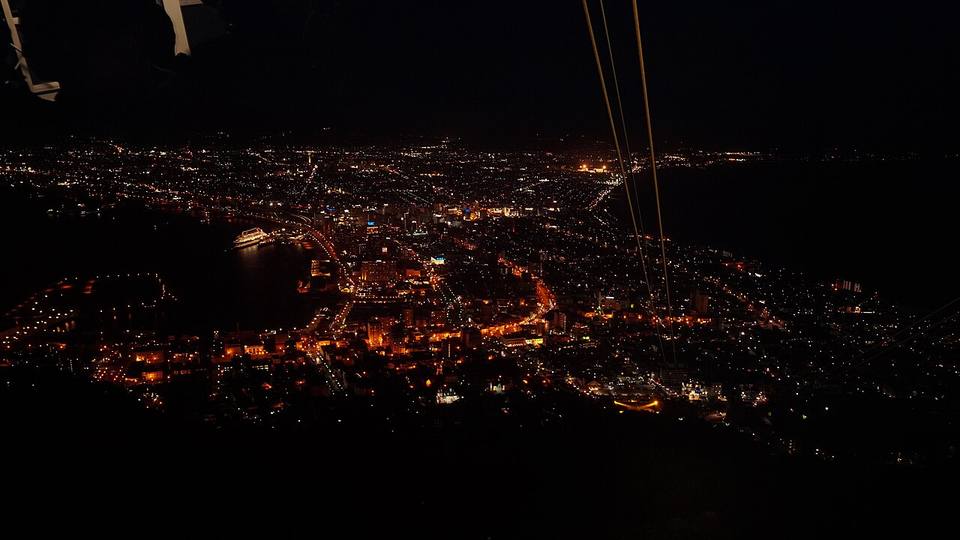
Mount Hakodate Night View
From the 334-meter summit, look down on the hourglass-shaped coastline pinched between the Tsugaru Strait and Hakodate Bay — the classic night-view composition, ranked alongside Hong Kong and Naples, is at its most complete here.
Location
Hakodate, Hokkaido
Stories and legends
Legend has it that the Ainu saw this mountain as the shape of a lying cow; the name Hakodate derives from a "hall" (館) built here in the Muromachi period by the Kōno clan (Hakodate was formerly written 箱館, "box hall").
History and context
Hakodate opened as a port in 1854, one of the first in Japan to do so; the summit was once an Imperial Japanese Army fortress, and only after controls were lifted postwar did it become a viewing spot. The ropeway opened in 1958; the current third-generation cars take about 3 minutes one way and carry about 125 passengers.
Local life
Hakodate is the port city where Japanese-Western eclecticism is strongest: the Motomachi district at the foot of the mountain keeps its cluster of Catholic, Orthodox, and Protestant churches and Western-style houses, while down below are the shouts of the morning market and the steam of Hakodate shio ramen. Half the magic of the night view is the density of lights — the old town is low-rise with warm yellow lights, set off by the pitch-black sea, and in squid-fishing season (early summer to autumn) you can see the dotted lights of squid boats on the water. Locals treat a trip up the mountain to see the night view as a date and farewell ritual, not just a photo stop.
Customs
The ropeway station is often shared with school-trip groups and couples; at the summit observatory there is a "heart-shaped" letter photo tradition (hunting for hidden characters in the night view is a spontaneous visitor game, not an official custom).
Beliefs
No specific religious association; its main cultural identity is its port-opening history and harbor scenery, and Motomachi's coexistence of many religions' buildings is itself a feature.
Local etiquette
The observatory is extremely windy, and in winter the wind chill can drop below -15°C — dressing too lightly is the biggest taboo; do not shine strong flashlights or camera flashes directly at others; the summit parking lot is controlled in peak season, so do not park illegally on the roadside.
Visiting notes
Best on clear winter nights and during the summer-autumn squid-light season; crowds peak within 30 minutes after sunset, so go up an hour before sunset to secure a spot, or go up a second time after 21:00 (last ropeway car subject to official announcements) for noticeably more quiet; you can also hike the trail, about 1 hour, to avoid the ropeway queue.
What to eat nearby
Hakodate shio ramen (函館塩ラーメン, clear salt broth, Hakodate's mainstream ramen); Hakodate morning market seafood rice bowl (海鮮丼, squid, sea urchin, and salmon roe in seasonal combinations); squid sashimi (イカ刺し, transparent and served live-style, with ginger soy sauce); Hakodate milk soft-serve ice cream; Lucky Pierrot burgers (ラッキーピエロ, a local Hakodate chain found only around Hakodate)
Hakodate Morning Market (in front of Hakodate Station, an area of about 250 stalls), Daimon Yokocho food-stall village, Western-style restaurants around Motomachi
Live squid may still twitch on the plate — that is a sign of freshness, so do not make a fuss or send it back; you may sample at the morning market, but do not squeeze the seafood
Seafood rice bowl 2,000–3,500 yen (about 95–165 yuan, for reference only); ramen 900–1,200 yen (about 42–56 yuan, for reference only)
The earlier you reach the morning market the fresher it is — arrive before 7:00; sea urchin is seasonal (fattest June–August), so ask about the day's origin when ordering.
Source leads: Japan National Tourism Organization (JNTO) Hakodate introduction, Hakodate City official tourism information, Mount Hakodate Ropeway official site.
Image source · 掬茶 · CC BY-SA 4.0