
Hokkaido · Natural wonder / World Natural Heritage
Shiretoko Five Lakes
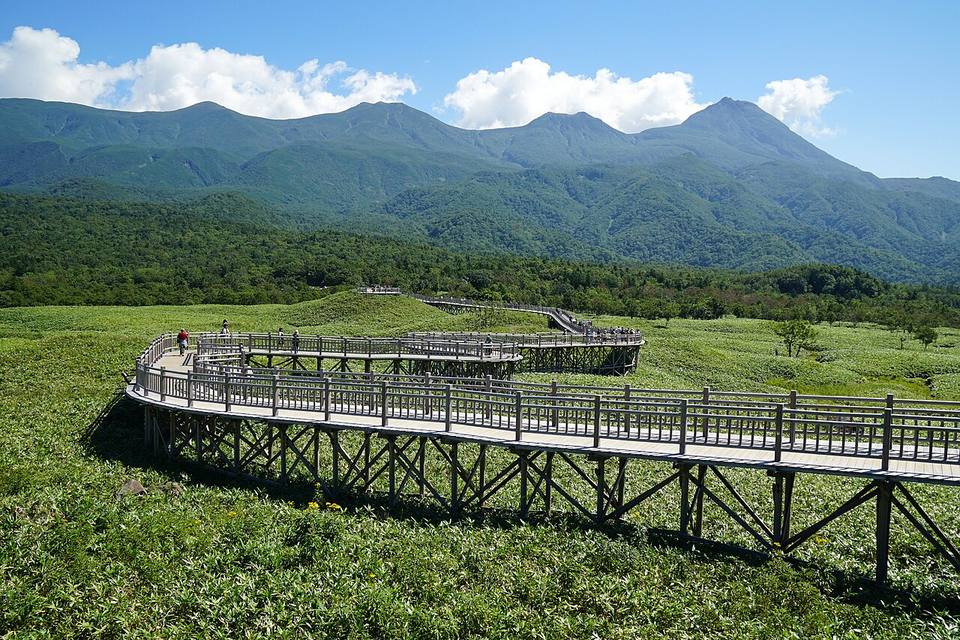
Five mirror-like lakes reflect the Shiretoko mountain range, with only an elevated boardwalk between you and the brown bears and primeval forest.
Location
Shari Town, Hokkaido, Shiretoko National Park
Stories and legends
"Shiretoko" comes from the Ainu "sir-etok," meaning "the end of the earth"; the Ainu regarded this land as a dwelling place of the gods, and the lake district has oral traditions such as the lake of the gods — indigenous legends.
History and context
Shiretoko was inscribed as a UNESCO World Natural Heritage site in 2005 (Japan's third natural heritage site), for the marine-land linked ecosystem in which nutrients brought by drift ice are carried inland by migrating salmon and trout and returned to the forest through brown bears feeding on them; the five lakes were formed by eruptions of the Shiretoko range and subsidence pooling water. Lake One is reachable by an elevated wooden walkway; the others require the ground trail and are subject to bear-activity controls.
Local life
Shiretoko is the origin point of Japan's sense of "untouched remoteness": no signal, no convenience stores, only the sound of bear bells and wind. Its management philosophy is strict — paths close during vegetation recovery, the park shuts when bears appear, and visitors are taught plainly that "people are guests, bears are the hosts." This restraint is precisely what makes its character: guides teach you to read bear droppings and claw marks, and travel turns from sightseeing into a nature lesson.
Customs
In peak season the ground trail requires joining a paid guided tour (a vegetation-protection and bear-safety system); in the off-season you must register and attend a briefing at the Shiretoko Five Lakes Field House.
Beliefs
No specific religious association; Ainu nature worship (all things have spirits) forms the cultural background, and its main cultural identity is ecological conservation.
Local etiquette
Absolutely no carrying or leaving behind food-smelling items, no leaving the group alone, and no running (running when meeting a bear is the most dangerous response); no loud noise; no eating or drinking on the elevated walkway, and drones are restricted throughout the park.
Visiting notes
The park is usually open from late April to mid-November (per the official site); best in June for fresh green and October for autumn-color reflections; if you just want an easy view, the elevated walkway to Lake One is enough (about a 40-minute loop) — avoid the midday tour-group peak by going in the first hour after opening.
What to eat nearby
Shari / Utoro seafood rice bowls (salmon roe, sea urchin in season); Shiretoko salmon parent-and-child rice bowl (ikura over salmon); venison dishes (エゾシカ, Ezo deer, legally hunted and a legitimate ingredient); kombu noodles / Rausu kelp dashi dishes; kelp and dried salmon souvenirs
Diners around Utoro fishing port, restaurants near the Shiretoko Nature Center, in front of Shari Station
Venison is a legitimate local resource-use menu item — you may accept or politely decline it, but do not confuse it with protected animals; diners are mostly small-scale and close when sold out
Seafood rice bowl 2,000–3,000 yen (about 94–141 yuan, for reference only)
Staying in Utoro with meals included is the most worry-free option; restaurants queue in peak season, so eating dinner before 17:00 is safer.
Image source · 663highland · CC BY 2.5