
Hokkaido · Lake / Volcano / Hot spring
Lake Toya
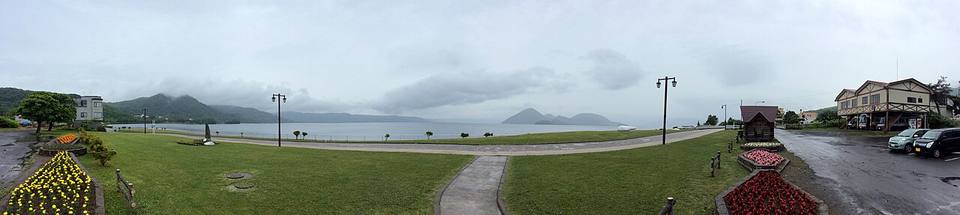
A caldera lake formed by an eruption about 110,000 years ago, with Nakajima island floating at its center and Mount Usu and Showa-Shinzan standing on its shore — 20,000 years of volcanic activity in a single view.
Location
Toyako Town and Sobetsu Town, Hokkaido
Stories and legends
The Ainu word "to-ya" means "lakeshore"; around the lake are Ainu oral traditions such as the golden and silver kettles and lake-deity narratives, passed down by the indigenous people.
History and context
Lake Toya is Japan's third-largest caldera lake, up to about 180 meters deep, and it does not freeze in winter (one of Japan's northernmost ice-free lakes); from 1943 to 1945 a wheat field bulged upward to form Showa-Shinzan, whose growth was secretly recorded in full by postmaster Masao Mimatsu — a living volcano specimen; the 2008 G8 summit was held here.
Local life
Toya's ethos is "living alongside an active volcano": Mount Usu erupts on average about every 30 years, and residents' drills and evacuation routes coexist with onsen prosperity, forming a distinctive disaster-coexistence culture. A sculpture park circles the lake with 58 sculptures along a full loop, and the onsen town sets off fireworks every night (the Lake Toya Long-Run Fireworks Festival, from late April to the end of October), turning everyday life into a festival. The fireworks last about 20 minutes from around 20:45 each night, and hotel guests can watch from their balconies.
Customs
Cycling around the lake and lakeside foot baths are standard local leisure; during fireworks season, sightseeing boats run night cruises for viewing.
Beliefs
No specific religious association; Ainu nature worship is its cultural undercurrent, and its main cultural identity is volcanic geology and hot-spring resort life.
Local etiquette
Nakajima is a nature reserve — you must go by boat, and do not chase or feed the Ezo deer; no open fires for camping along the shore; when a volcano alert is issued, obey the controls and stay out of restricted zones.
Visiting notes
Fireworks season (late April–end of October) is the liveliest; winter is the quietest and clearest; to avoid crowds, choose the Sobetsu side of the shore or circle the lake early in the morning; the Sairo Observatory on the west side is less crowded.
What to eat nearby
Lake Toya wagyu / Sobetsu wagyu dishes; Uchiura Bay seafood (scallops and sea urchin in season); farmhouse vegetable curry from around Mount Usu; Toya milk soft-serve ice cream; Wakasaimo and other local pumpkin sweets
The Lake Toya onsen town, the farmhouse-restaurant area of Sobetsu Town, small shops along the shore at Tsukiura and Naka-Toya
Farmhouse restaurants are mostly reservation-only and cash-based; sea urchin and scallops are seasonal, so do not insist on them out of season
Lunch 1,500–2,500 yen (about 70–118 yuan, for reference only); onsen ryokan with two meals from 18,000 yen (from about 846 yuan, for reference only)
Prices jump during fireworks season, so book 1–2 months ahead; the lake-loop bus runs infrequently, so driving or cycling gives more freedom.
Source leads: Toyako Town official tourism, Lake Toya Onsen Tourism Association, Ministry of the Environment materials on the Toya caldera geology.
Image source · wanderingchina · CC BY-SA 3.0