
Hokkaido · Natural wonder / Winter only
Abashiri Drift Ice
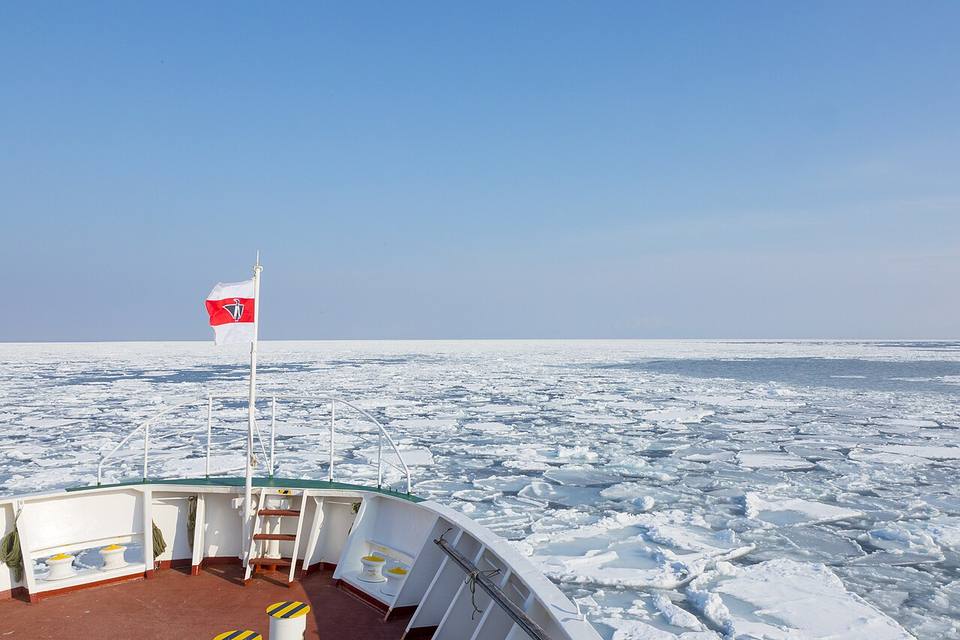
Freshwater ice from the mouth of the Heilongjiang (Amur River) drifts 1,500 kilometers to freeze the entire Sea of Okhotsk; an icebreaker plowing through the ice is a polar-style experience at Japan's lowest latitude.
Location
Abashiri, Hokkaido, Sea of Okhotsk
Stories and legends
The indigenous peoples of the Okhotsk coast regarded the drift ice as "a gift of the sea god," and the saying that drift ice brings rich fishing is folk oral tradition.
History and context
How drift ice forms: Heilongjiang freshwater freezes under the Siberian cold, then rides wind and currents south, usually reaching Abashiri in late January, thickest in February, and retreating by late March (JNTO states this timing pattern explicitly); the Abashiri icebreaker "Aurora" (おーろら) cruises for about 1 hour; on Mount Tento, the Okhotsk Ryuhyo Museum lets you touch real drift ice in a -15°C experience room.
Local life
Abashiri's character is unique for its triple identity of drift ice, prison, and fishing port: the harshest nature, the northernmost fisheries, and the famous Abashiri Prison Museum (the history of Meiji-era development and prisoner labor) side by side in one city. In winter the whole city runs around the drift ice: the drift-ice sightseeing train "Ryuhyo Monogatari," the drift ice festival, seals and Steller's sea eagles at the port — the cold is run as a festival, not endured as a hardship.
Customs
Watching the ice from the icebreaker's deck is a universal ritual; hot drinks on board and drift-ice angel (クリオネ, clione / sea angel) souvenirs are standard issue.
Beliefs
No specific religious association; its main cultural identity is marine natural phenomena and frontier development history.
Local etiquette
The deck is slick with ice — wear non-slip snow boots and do not climb the railings; drift ice can vanish in a day with the wind, so do not blame the operators for "no ice" — check the drift-ice information before setting out; do not throw anything into the sea to feed the birds.
Visiting notes
The best window is early to mid-February; within the same trip, keep Monbetsu's "Garinko" as a backup (ice conditions differ between the two ports); on the first morning sailing the ice-surface light and sea-eagle activity are best; book hotels and boat tickets a month ahead in drift-ice season.
What to eat nearby
Abashiri hairy crab / king crab (in season); drift-ice beer (流氷ドラフト, a blue beer that is a novelty drink); the prison meal recreation at the Abashiri Prison cafeteria (ホッケ定食, Atka mackerel set meal — a real museum experience); Okhotsk seafood rice bowl; Abashiri milk and dairy products
The dining street in front of Abashiri Station, around the Mount Tento Ryuhyo Museum, the Abashiri Port market area
Crab pricing varies greatly by the crab or by weight — ask the pricing method before ordering; the prison meal is a cultural experience program, so do not clown around imitating prisoners inside the museum
Crab dishes 4,000–8,000 yen (about 188–376 yuan, for reference only); set meals 1,200–1,800 yen (about 56–85 yuan, for reference only)
Drift-ice information is updated daily, so leave one flexible day in the itinerary; the bus from Memanbetsu Airport to Abashiri takes about 30–40 minutes.
Image source · kkawamura · CC BY 4.0