
Norse Mythology · Folk belief / tales of hidden beings
The Hidden People of Iceland — Huldufólk
In Iceland, rerouting a planned highway for the elves is not news — it is common sense.
Stories and legends
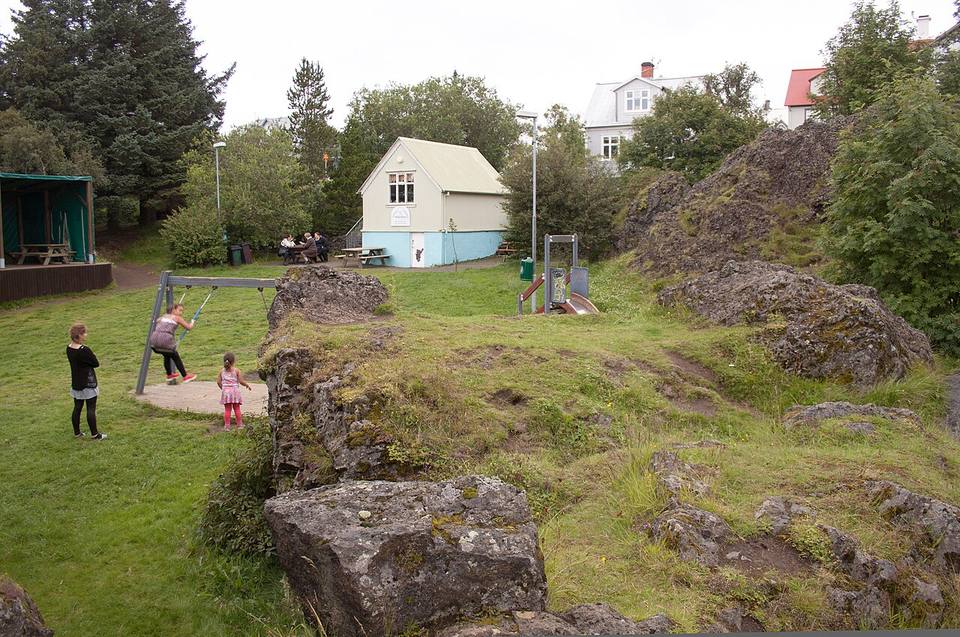
The Hidden People (Huldufólk) look just like humans; they simply live in "another layer of the world" within the rocks, hillocks, and lava fields, with churches, farms, and festivals of their own, only invisible to mortals. One folk explanation of their origin carries an echo of the Bible: Eve hid the children she had not washed clean, not daring to show them to God, and God said, "What is hidden shall remain hidden" — and so the Hidden People came to be (another account makes them angels of uncertain allegiance in the Fall, set between the human world and hell). Ordinarily they and humans keep the peace: farmers leave a lamp burning for the elves on Christmas night, and legend says the elves move house on New Year's night, when a person who sits at a crossroads all night and refuses all their food and temptations can win a treasure (most cannot last the night). The cost of giving offence is very specific: bulldozers that push elf rocks break down mysteriously, and workers are injured one after another — such "accident narratives" appear in Icelandic newspapers with notable frequency. The most famous case came in 2013–2015, when a highway at Álftanes crossed the Gálgahraun lava field and environmental and elf-belief advocates identified a boulder as an elf church (Ófeigskirkja); construction stalled, and the affair ended with "the elves agreeing to move house" and the boulder being carefully relocated to the roadside. The road walks around the stone, and the story walks around the road — the Hidden People live in Iceland's planning maps.
Origins of the story
Elf narratives are seen in Icelandic folk-tale collections from the 13th century onward (Jón Árnason's 19th-century Icelandic Folk Tales is the systematic source). Figures for the proportion of believers must be handled with care: a 1998 survey found about 54% of respondents "did not deny the existence of elves," while a 2007 University of Iceland survey found about 62% considered the existence of elves "possible / quite likely" — the two surveys asked different questions and the figures cannot be compared directly; the media often conflate them, and this entry labels them side by side. The "elf walks" of Hafnarfjörður and the Reykjavík Elf School (Álfaskólinn) are both contemporary folk-culture businesses (the Elf School is a private paid course, with fees for reference only), not certified academic institutions.
Customs
There is only one core taboo, and it is to be carried out in earnest: do not move, climb on, or carve the rocks identified as elf dwellings — in construction and hiking alike; do not loudly mock "superstition" beside an elf stone (a point of local cultural sensitivity); ask the householder's permission before photographing elf houses in private gardens; if you are invited to local activities at Christmas / New Year, respect the custom of "leaving a lamp for the elves" and do not make sport of it.
Places you can visit
Hafnarfjörður (the Hellisgerði lava park, the local narrative point of the "elf royal palace" at Hamarinn cliff, elf-themed walking tours); the Reykjavík Elf School (courses of a few hours with a certificate, for reference only); the elf-church stone at Álftanes / Gálgahraun lava field (reachable from the roadside; mind the boundaries of private land); the little "elf house" models by roadsides everywhere. Tour and course schedules are as officially announced each year.
Image source · Szilas · Public domain
