
Norse Mythology · Heroic myth / tales of giants
Thor and the Giants
The most down-to-earth of all the gods: driving a goat-drawn chariot and swinging a short-handled hammer, he fought giants all his life among the mountain shapes of the fjords.
Stories and legends
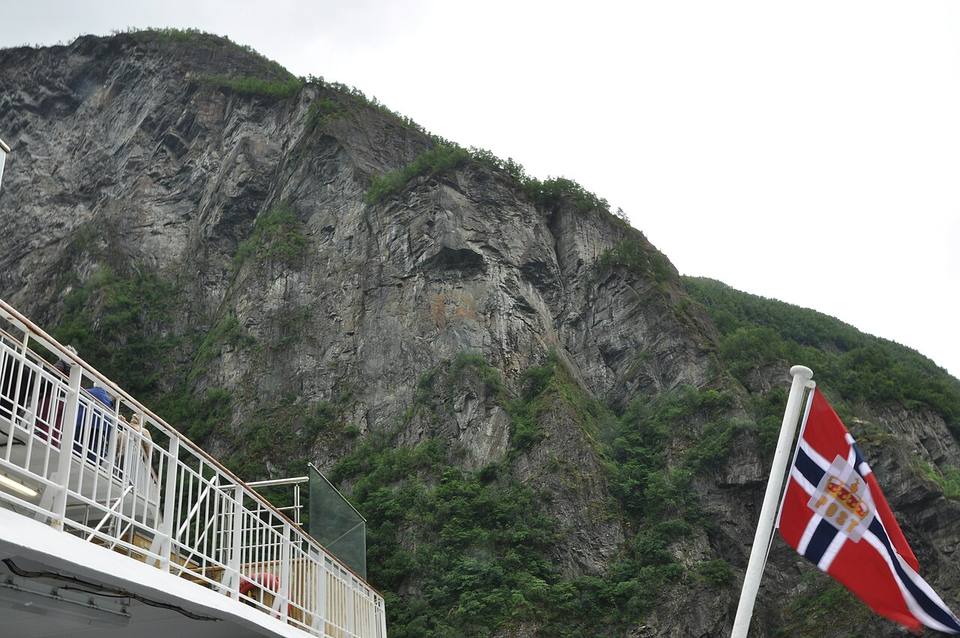
Thor is the son of Odin and Jörð, the earth goddess — red-bearded and mighty, wearing a belt of strength and wielding the hammer Mjölnir, whose handle came out a hand's breadth short because of Loki's meddling, yet which remained the weapon the giants feared at the mere rumour of it. His two goats, Tanngrisnir and Tanngnjóstr, draw his chariot; when he is hungry they can be slaughtered and eaten, and the next day he revives them with his hammer (only the bones must not be broken). His duels with the giants are mostly perilous and comic at once: in the camp of the giant Skrýmir, Thor swung his hammer all night and Skrýmir took it only for acorns falling on his head; at a banquet he was set to "lift a cat" and raised only one paw (the cat was in fact Jörmungandr, the great serpent that encircles the world), and he lost a wrestling bout with an old woman (the old woman was "Age" itself). His most hair-raising exploit is the fishing for the serpent: with an ox's head for bait, Thor hooked Jörmungandr from the boat of the giant Hymir, and the giant, terrified, cut the line — that account is left to be settled at Ragnarök: Thor will kill the great serpent, be wounded by its venom, and die after retreating nine steps. Norwegians call the steep, human-shaped mountain forms on both banks of the fjords "trolls (troll)"; Icelanders have named a whole highland valley "Thor's land," Þórsmörk — here mythology is not enshrined on an altar but used to name the map.
Origins of the story
Thor's stories are scattered through the Poetic Edda (诗体埃达) — Þrymskviða (斯律姆之歌) and Alvíssmál (阿尔维斯之歌) — and the Prose Edda (散文埃达) · Gylfaginning (欺骗基尔菲) (the Skrýmir and serpent-fishing episodes); Thor was the god with the highest level of folk belief in the Viking Age, and the Icelandic settlers mostly worshipped Thor — the toponymic evidence (the Þórs- prefix) is spread across Iceland and Norway, standing in contrast to Odin's more royal/poetic character, a standard observation in the study of religion. Fjord place-names of the "troll" type (such as Trolltunga, the Troll's Tongue, and Trollstigen, the Troll's Ladder) are mostly folk etymologies and later namings, and must be presented in the register of folk legend.
Customs
Trolltunga is a high-risk hike — do not climb in winter without a guide, and do not perform dangerous poses for photographs on the tip of the tongue (there have been fatal falls over the years); on highland river crossings, ride only in professional vehicles; do not stack stones at waterfalls and fjords for "check-in photos" (it damages the landforms and is an act expressly opposed locally); treat present-day believers in Thor (Ásatrú) with the same respect as any other religion.
Places you can visit
Trolltunga (the Troll's Tongue) in the Norwegian fjord region (a seasonal hike requiring a guide and equipment); the Geirangerfjord and its "troll" mountain-form explanation points; the Þórsmörk highlands in Iceland (accessible only by river-crossing vehicles/buses); the Goðafoss waterfall (the narrative point where the god-images were thrown into the falls at the Conversion, intertextual with the end of the Thor faith); the Viking galleries of the National Museum of Iceland in Reykjavík. Hiking seasons and opening times are as officially announced each year.
Image source · Herbert wie · CC BY-SA 4.0