
Greek Mythology · Heroic epic
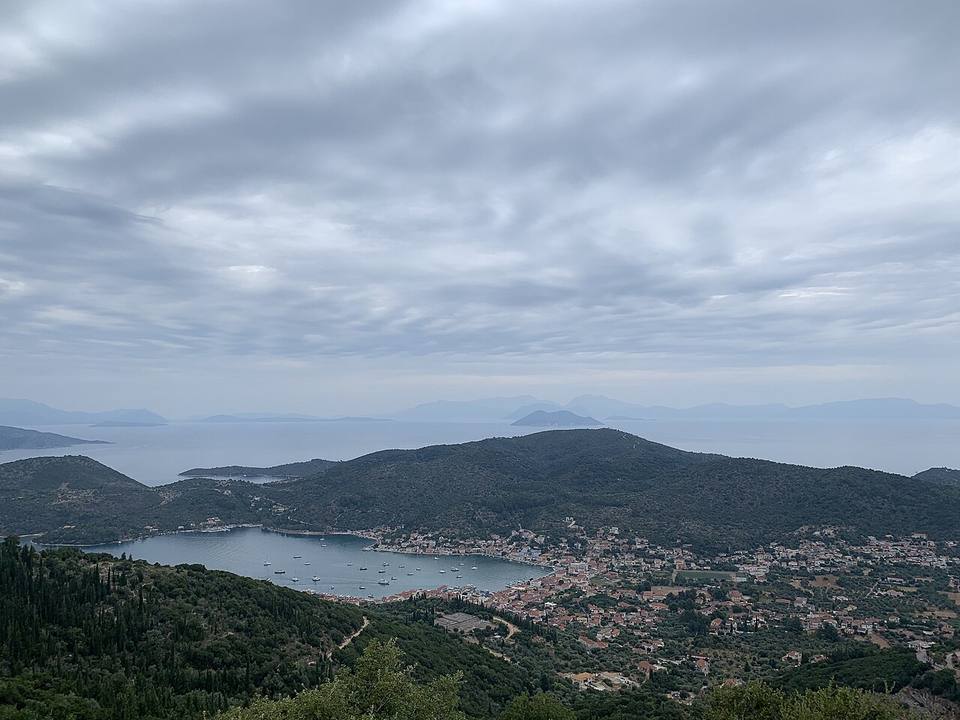
Odysseus's Ithaca
The hero who wandered ten years, fighting gods and sea, faced his final test in his own home: to recognise himself — and be "verified" by his wife by means of a bed.
Stories and legends
After the fall of Troy, Odysseus could not get home for ten years: in the Cyclops's cave he called himself "No One" and blinded Polyphemus, and was therefore held in grudge by Poseidon; on Circe's island his men were turned into pigs; at the Sirens he had his ears stopped with wax and himself bound to the mast; between Scylla and Charybdis he chose the lesser loss; his crew slaughtered and ate the cattle of the Sun god, the whole ship was wrecked, and he alone drifted to Calypso's island and was kept there seven years. After the gods resolved to let him go, the Phaeacians carried him, sleeping, back to a bay of Ithaca, and Athena turned him into an old beggar to test men's hearts: his old dog Argos recognised his master, wagged his tail, and died; his old nurse recognised him by the boar scar on his leg. In the palace, more than a hundred suitors were pressing Queen Penelope to remarry and consuming the family's wealth. Penelope set the contest: whoever could string Odysseus's great bow and shoot through twelve axe-heads would be her new husband. The "beggar" succeeded with a single arrow, then, with Telemachus, barred the doors and cleared out the suitors. The final verification belonged to his wife: she purposely said, "Have the marriage bed moved out," and he blurted out in anger that the bed was one he had made himself with a living olive tree as its post, and no one could move it — a secret belonging only to the two of them. Penelope threw herself into his arms: the epic of wandering ends on a bed that cannot be moved.
Origins of the story
Books 13–24 of the Odyssey (composed around the 8th century BCE) are the second half, the homecoming. The correspondence between Homer's Ithaca and today's island of Ithaca is the mainstream view but not a settled conclusion; scholarship also offers Kefalonia / Lefkada theories (Dörpfeld and others), and travel presentation should label it a "traditional identification." The Mycenaean remains excavated around Stavros on the island and the local claims of a "Palace of Odysseus" are a hypothesis under archaeological investigation and must not be written as a confirmed royal palace; the Cave of the Nymphs (Marmarospilia) is locally identified with the cave described in book 13 of the Odyssey, and its internal opening status varies from year to year.
Customs
If the cave is closed, do not climb over the fence; the Stavros museum is a small museum — do not touch the open-air stone structures; Ithaca's mountain roads have many hairpin bends, so rental-car drivers must avoid fatigue; when swimming in the bays, mind the ferry lanes and do not dive in the harbour area.
Places you can visit
The port of Vathy on the island of Ithaca and its archaeological museum; the statue of Odysseus in the village of Stavros and the Stavros Archaeological Museum (Mycenaean and Corinthian-period artefacts); the Cave of the Nymphs (Marmarospilia; opening as announced on site — entry is not guaranteed); Dexa Bay and the harbour of Phorcys (identified in one account as the landing place); the Melissani Cave on Kefalonia (a geological site sharing the "cave of the nymphs" imagery — the two places must not be conflated). Island festivals and ferry timetables are as officially announced each year.
Image source · Daniel Eriksson · CC BY 4.0