
Chinese Mythology · Bashu mythology.
Cancong and Yufu
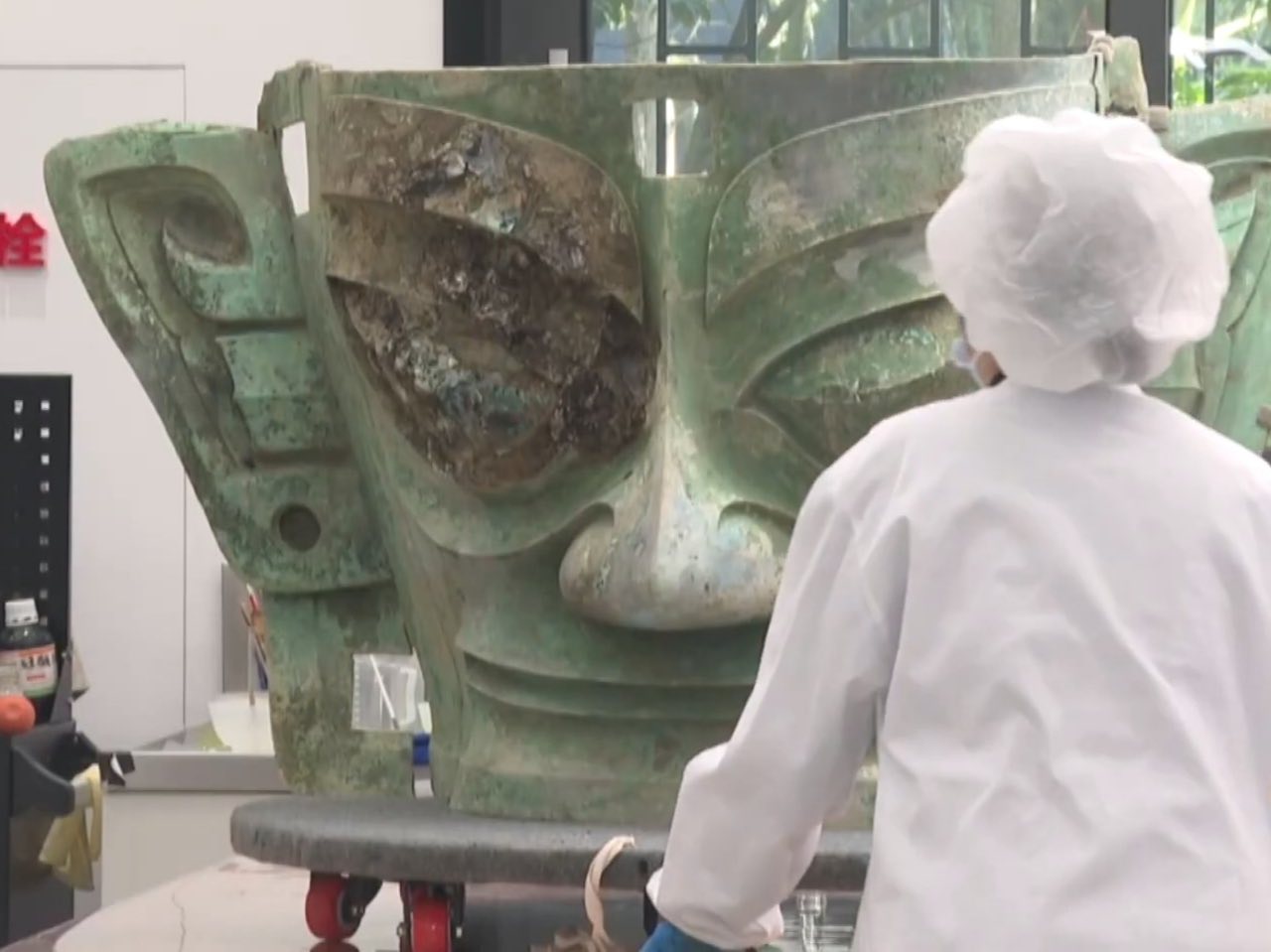
Cancong with his protruding eyes and Yufu the fisher-king: the earliest rulers of Shu in the Huayang Guozhi.
Stories and legends
The first king of ancient Shu was called Cancong. He was born with protruding eyes, could see far away and understand the will of the gods, led the Shu people to settle on the Chengdu Plain, and taught them to raise silkworms and weave silk, laying the foundations of ancient Shu. After him came Boguan, and after Boguan came Yufu, who taught the people to fish and won merit for controlling floods, so that Shu enjoyed abundant harvests ever after. Another local telling says that after Cancong died he was buried in a stone coffin, and from then on the Shu people practised stone-coffin burial.
Origins of the story
The verifiable text is the account in the Huayang Guo Zhi, Shu Zhi, by Chang Qu of the Eastern Jin, which says that Cancong had protruding eyes, ruled as king of Shu, and was buried in a stone coffin after his death, and that he was followed by Boguan and Yufu, then by Duyu and Kaiming, until Shu was conquered by Qin in 316 BCE. Neither Cancong nor Yufu has contemporary written or archaeological evidence, and they belong to a legendary lineage compiled in Han and Jin texts. The deeds of Yufu in controlling floods are also left vague in the original Huayang Guo Zhi text, and later embellishments can only be heard as legend. The link between the Sanxingdui protruding-eyed masks and Cancong is only a scholarly association and remains uncertain. Whether the name Cancong truly relates to silkworm raising is also a later reading of the characters, and remains uncertain.
Places you can visit
When you visit the Sanxingdui Museum in Guanghan, Sichuan, you can see the protruding-eyed bronze masks and bronze human heads, and the displays tell the legend of Cancong and his protruding eyes. The Jinsha Site Museum in Chengdu shows remains from the later period of ancient Shu, which you can view alongside Sanxingdui to follow the change of ancient Shu from Sanxingdui to Jinsha. Both museums require advance booking, and ticket prices and opening hours follow the official announcements.
Image source · The giant bronze mask with protruding eyes from Sanxingdui · 中国新闻网 · CC BY 3.0
