
Chinese Mythology · Chu mythology.
Qu Yuan's Nine Songs: The Mountain Spirit
A mountain goddess riding a red leopard, draped in fig vines, waiting in wind and rain for someone who never comes.
Stories and legends
Deep in the mountains lived a mountain spirit. She wore a cloak of creeping fig and a sash of mistletoe vine, rode a red leopard followed by a patterned lynx, sat in a carriage of magnolia wood, and flew a banner of cassia blossom, gathering fragrant herbs in her arms to give to the one she longed for. She climbed alone to the mountain peak for the meeting and stood waiting beneath the clouds, waiting from day into night while wind and rain came on, yet the one she longed for never appeared, leaving only thunder, the cries of gibbons, and the sighing forest to keep her company.
Origins of the story
The verifiable text is Shan Gui, the ninth poem in the Nine Songs of the Songs of Chu, in which the goddess wears creeping fig and a mistletoe sash, rides a red leopard followed by a patterned lynx, and sits in a magnolia carriage with a cassia banner, and which ends with rolling thunder and dark rain, gibbons crying and monkeys calling at night, wind sighing through the trees, and longing for the young lord bringing only grief. The poem began as a witch song for sacrifices to a mountain deity in Chu, rewritten in about the late Warring States period. Whether the mountain spirit was Yaoji, the goddess of Mount Wu, is only a later comparison and remains uncertain. Since Wang Yi, readers have mostly read the mountain spirit as Qu Yuan speaking of himself and the young lord as King Huai of Chu, but this is a reading from the Han dynasty onward, not the original meaning of the poem, and the two readings stand side by side as uncertain.
Places you can visit
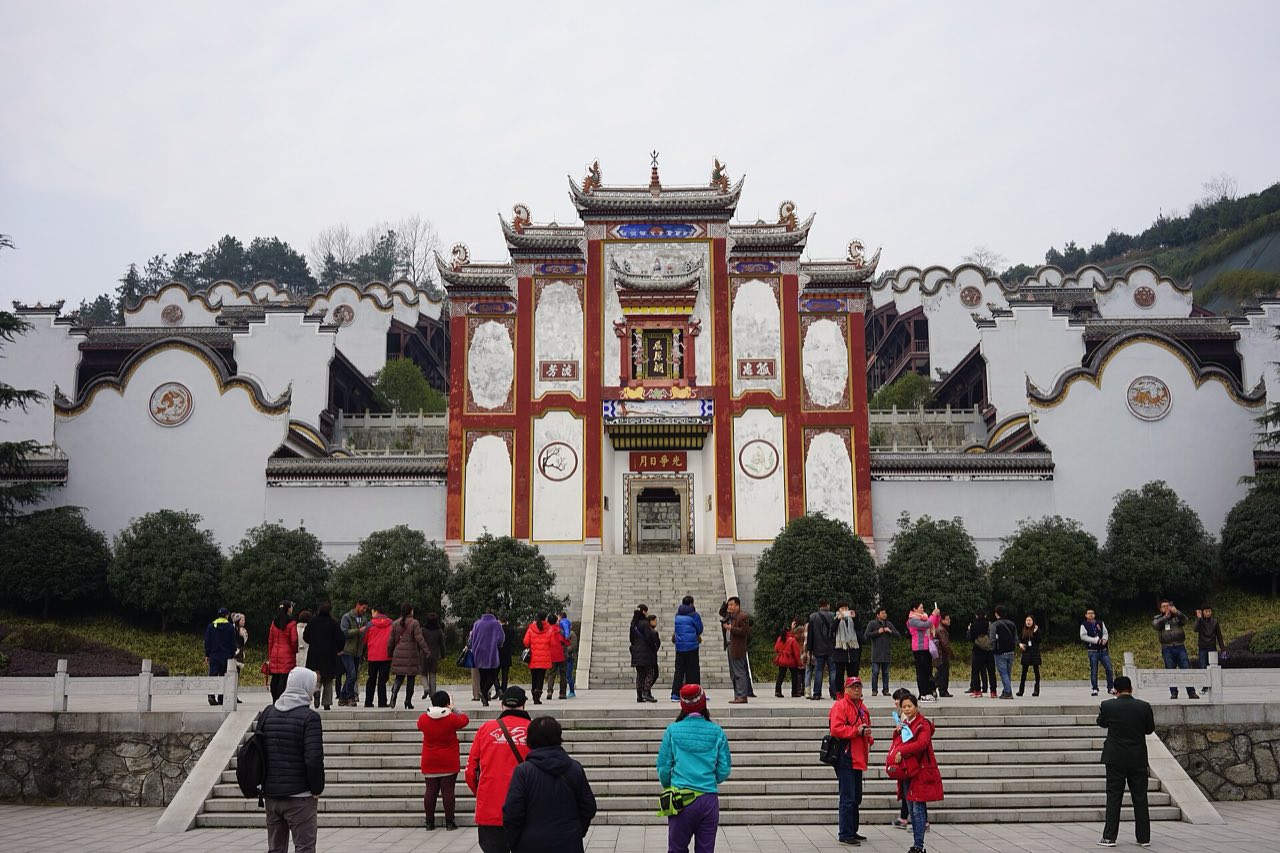
When you visit the Qu Yuan Temple and the Qu Yuan Homeland cultural tourism area in Zigui, Hubei, you can see statues of Qu Yuan and stone inscriptions of the Songs of Chu, and the area often holds displays on the Nine Songs theme. Travelling down the river to the Wu Gorge area, local people will point out the Goddess Peak to you, which legend says is the mountain goddess of Mount Wu transformed, though whether the mountain spirit and the goddess are the same figure remains uncertain in identification, and you can hear the two as two fine legends in their own right. Ticket prices and opening hours follow the official announcements.
Source leads: https://en.wikipedia.org/wiki/Jiu_Ge;https://zh.wikisource.org/wiki/楚辭/山鬼;https://zenodo.org/records/12574077
Image source · The Qu Yuan Temple in Zigui (not an image of the Mountain Spirit) · Jan Bockaert · CC BY-SA 2.0
