
Japanese Mythology · Folk tale / monogatari literature
Princess Kaguya: The Tale of the Bamboo Cutter
A princess of the Moon Palace, born from a bamboo stalk, refused all the power and love of the human world with five impossible treasures.
Stories and legends
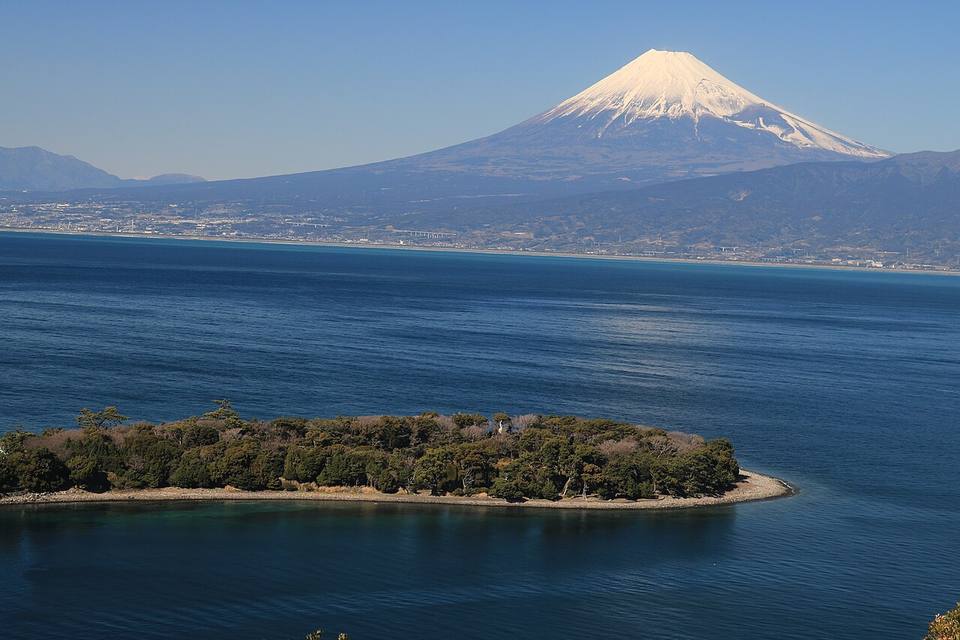
The bamboo cutter Sanuki no Miyatsukomaro (also written 讃岐造), cutting bamboo in the grove, saw one stalk glowing; he split it open and found a tiny girl of three inches, her clear light filling the room. He and his old wife raised her, and in three months the infant grew into a beauty of overwhelming loveliness, named "Nayotake no Kaguya-hime" (the Shining Princess of the Supple Bamboo). Thereafter, whenever the old man cut bamboo he found gold, and the family suddenly grew rich. Five noble suitors came seeking her hand, and Kaguya-hime set each of them a task: the Buddha's stone begging bowl, the jewelled branch of Hōrai, the robe of the fire-rat, the five-coloured jewel from a dragon's neck, and the swallow's cowrie shell — all things unobtainable in this world. The five either forged their objects, were exposed, or retreated before the difficulty; not one succeeded. The Emperor, hearing of her beauty, wished to summon her into the palace; Kaguya-hime refused on pain of death, and exchanged poems and letters with the Emperor for three years only. In the final summer she gazed at the moon each night and wept, and at last confessed: I am a person of the Moon Palace, exiled to the human world for a fault; on the fifteenth day of the eighth month, envoys from the moon will come to fetch me. The old man begged the Emperor to send two thousand soldiers to guard her, but when the moon envoys descended, the soldiers' bows and arrows went limp and their eyes could not see. Kaguya-hime changed into a feather robe, left a letter and the elixir of immortality for the Emperor, and rode the clouds away — once the feather robe was on her shoulders, all human love was forgotten. The Emperor, unwilling to enjoy long life alone, ordered the letter and the elixir to be taken to the highest mountain of Suruga, nearest to heaven, and burned; the smoke rose straight into the sky, and the mountain was named for it the mountain of "no-death" (fuji/fushi) — that is, Mount Fuji. The smoke is the cloud vapour of Fuji to this day.
Origins of the story
The Tale of the Bamboo Cutter (竹取物语) was written in the early Heian period (late 9th to early 10th century) and is Japan's oldest extant work of monogatari literature; its author is unknown. The derivation of Fuji's name from "no-death" (fushi) is one folk etymology; scholarship also holds Ainu-language and other theories alongside it, and no conclusion is settled. Places such as Fuji City in Shizuoka have local narratives of a "bamboo-cutter legend site" (identifying the bamboo cutter's location), which are local legends; the Taketori Park in Kōryō Town, Nara (the town's claim as the tale's stage), is likewise a local account.
Customs
Climbing Mount Fuji must follow the Shizuoka/Yamanashi official rules for that year — climb only in the official season, pay the mountain-entry cooperation fee, and avoid equipment-less night "bullet climbing"; when worshipping at Sengen shrines, do not throw anything other than coins into the Wakutama Pond; moon-viewing (tsukimi) offerings of dumplings and pampas grass are a household custom — at public events, follow the organisers' rules.
Places you can visit
The Mount Fuji World Heritage Centre in Shizuoka and Fujisan Hongū Sengen Taisha (the head shrine of Fuji worship; the climbing season and festivals are as officially announced each year); bamboo-cutter legend exhibition points in Fuji City (sites of local legend); Taketori Park in Kōryō Town, Nara; the bamboo grove of Arashiyama in Kyoto (not a legendary site — only a destination associated with the bamboo image; do not confuse it with a place of origin).
Image source · Alpsdake · CC BY-SA 4.0

