
Japanese Mythology · Tales of yōkai / tales of oni
Shuten-dōji of Mount Ōe
The oni king who held Mount Ōe and abducted the noble daughters of the capital was defeated in the end by a flask of poisoned sake and a general disguised as a mountain priest.
Stories and legends
In Heian-kyō, daughters of noble houses went missing again and again; divination said it was the work of Shuten-dōji, the oni king of Mount Ōe. The dōji was born with features as beautiful as a painting (one account says he was originally a temple acolyte of Echigo/Tanba, who, envied for his looks, drifted into becoming an oni — a later, sympathetic origin tale); he drank human blood and feasted without cease, with a band of oni under him including Ibaraki-dōji and Hoshikuma-dōji. The Emperor ordered Minamoto no Yorimitsu (Raikō) to lead his "Four Heavenly Kings" (Watanabe no Tsuna, Sakata no Kintoki, Usui no Sadamitsu, and Urabe no Suetake) on the expedition. The men disguised themselves as mountain priests and lodged at the oni's palace; the "god-sent oni-poison sake" bestowed by the gods and Buddhas drugged the whole band of oni, and Yorimitsu cut off Shuten-dōji's head as he lay drunk — the severed head flew up and bit into Yorimitsu's helmet, stopped only by his star-crested spare helmet, the oni's eyes still glaring. Watanabe no Tsuna separately cut off one of Ibaraki-dōji's arms at the Rashōmon gate (in one version, at the Ichijō Modoribashi bridge), and the oni turned into an old woman to trick the arm back — another famous scene. The abducted girls were rescued and the capital was at peace again. The oni king's head is said by legend to be buried around Kubizuka Daimyōjin (a site of local tradition). Since then, the "oni" in Japanese culture is both the calamity driven off with beans at Setsubun and the "other" seriously studied at the Mount Ōe museum — the narratives left by the defeated often outlive the victors.
Origins of the story
The story of Shuten-dōji took shape in the Muromachi otogi-zōshi system of the Shuten-dōji Picture Scrolls (酒吞童子绘卷); the extant scrolls are mostly Edo copies. The stage is disputed between the Tanba Mount Ōe theory and the Tango Mount Ōe theory; both places have oni-culture facilities, and this entry presents it from Fukuchiyama in Kyoto (the Senjō-ga-hara area of the Tango line), with the dispute noted. Around Mount Ōe there are two earlier oni-expelling legends — those of Hikoimasu no Miko and Prince Maroko — making, together, the "three oni legends" (the museum's exhibition framework). Setsubun bean-throwing derives from a composite of the court's tsuina exorcism rite and shrine/temple Setsubun assemblies; it was not instituted specially for Shuten-dōji.
Customs
At Setsubun bean-throwing, the call is "Oni out, fortune in" — but some temples, out of deference to the oni deities or honzon they enshrine, change the call to "fortune in" only or "oni in" (as at temples where oni practise asceticism); follow local custom and do not take matters into your own hands; eating the "year beans" after the scattering — as many beans as one's age — is a folk belief, and small children should be watched against choking; the oni tiles at the museum are exhibits — do not touch them; when hiking, do not leave the trails, and take care driving on early mornings in Mount Ōe's sea-of-clouds season.
Places you can visit
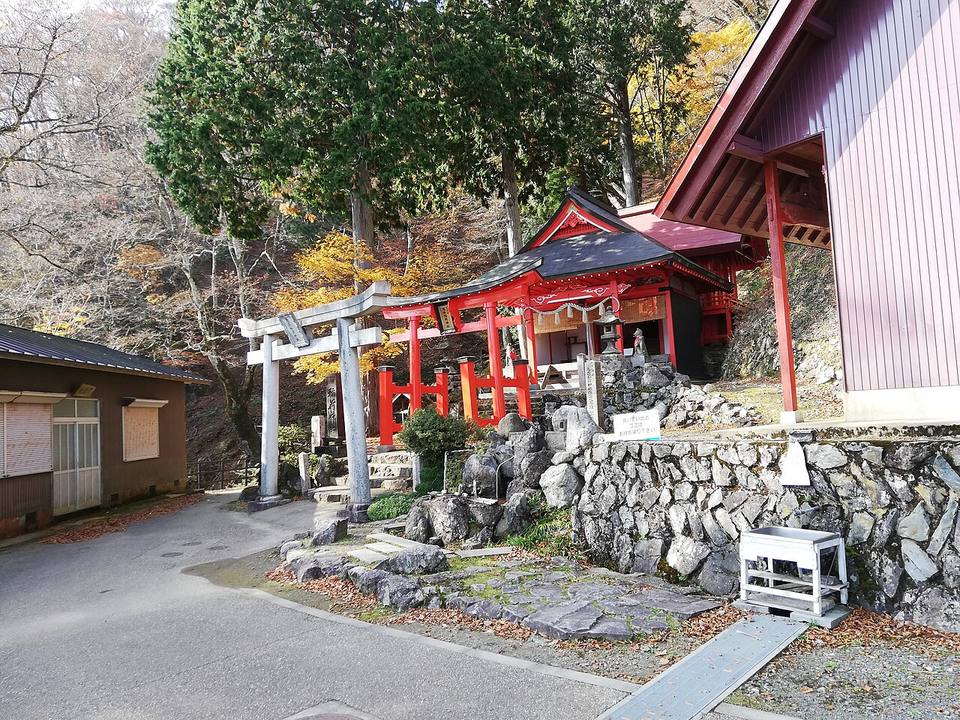
The Japan Oni Exchange Museum in Ōe Town, Fukuchiyama City, Kyoto Prefecture (at the foot of Mount Ōe, with a collection of oni tiles and oni masks from around the world; a giant oni tile stands before the gate; opening hours and admission are for reference only, as set by the museum); the hiking trails of Onitobiyama/Senjōgahara and Kubizuka Daimyōjin (sites of local tradition); famous Setsubun assemblies within Kyoto City: at Yoshida Shrine, Mibu-dera, Kitano Tenmangū, and others (usually around 3 February, as officially announced each year).
Image source · Yukinobu Kurata (倉田幸暢) · CC0
